


Best Electric Scooters for Commuting in 2026: Top 8 Picks Reviewed

Find the best electric scooter for commuting in 2026. We compare range, weight, price, and features across 8 top-rated commuter scooters including Segway, Levy, NIU, and more.

4190 words

The best electric scooters for commuting in 2026 are the Segway Ninebot Max G2 for its unmatched 43-mile range and hydraulic suspension, the Levy Plus for its featherweight 30-pound frame with swappable batteries, and the NIU KQi3 Pro for riders who want premium features without the premium price tag. We tested and researched dozens of commuter scooters to find the eight that balance range, portability, durability, and value for daily riders.


Table of Contents


How We Picked the Best Commuter Scooters


Commuting is not the same as weekend joy riding. Your scooter needs to perform reliably five days a week, in varying weather, across real-world road surfaces. We evaluated every scooter against the criteria that matter most to daily commuters.


Range that covers your commute with margin to spare. The average scooter commute is 3 to 7 miles each way. We recommend buying a scooter with at least twice your round-trip distance in rated range, because real-world range drops 20 to 40 percent due to hills, wind, rider weight, and cold weather. Every scooter on this list delivers at least 20 miles of rated range.


Weight you can actually carry. If your commute involves stairs, public transit, or an elevator, weight matters enormously. Scooters under 30 pounds — like the Levy Plus and the Unagi Model One Voyager — are genuinely portable. Scooters in the 40 to 55 pound range are roll-only; plan on wheeling them folded beside you. Anything above 55 pounds is best for door-to-door rides with no carrying required.


Water resistance for unpredictable weather. We required a minimum of IP54 water resistance for every pick on this list. Commuters cannot always avoid rain, and a scooter that dies in a drizzle is not a commuter scooter. The Apollo City 2024 leads the pack with IP66 certification.


Tires and suspension for comfort and reliability. Pneumatic tires offer the best ride comfort and grip. Tubeless pneumatic tires add puncture resistance. Solid honeycomb tires eliminate flats entirely but transmit more vibration. We matched tire type to rider priorities for each pick. For suspension, hydraulic systems (like the Segway G2's front fork) provide the smoothest ride, followed by dual spring setups.


Safety features for riding in traffic. Every scooter on this list has front and rear lights. We gave bonus points for turn signals, regenerative braking, triple braking systems, and high-visibility deck lighting. If you need repair or maintenance service, we recommend finding a certified shop near you.


Side-by-Side Comparison Table


Scooter Price Range Top Speed Weight Motor Best For
Segway Ninebot Max G2 $800 43 mi 22 mph 54 lbs 1000W peak Best Overall
Levy Plus $629–749 20 mi (unlimited w/ spare) 20 mph 30 lbs 700W peak Best Lightweight
NIU KQi3 Pro $599–699 31 mi 20 mph 44.75 lbs 700W peak Best Value
Gotrax G6 $495–599 25–35 mi 20 mph 45 lbs 500W Best Budget
Hiboy S2 Pro $425–650 25 mi 19 mph 36.4 lbs 500W Best Maintenance-Free
TurboAnt V8 $800 50 mi 20 mph 47.6 lbs 450W Best Long-Range
Apollo City 2024 $1,499–1,699 23–43 mi 27–32 mph 57–65 lbs 960Wh battery Best Premium
Unagi Model One Voyager $1,490 / $69/mo 12–25 mi 20 mph 29.6 lbs Dual 250W Best Design

Want to build your own side-by-side comparison? Use our scooter comparison tool to filter by the specs that matter most to your commute.


Segway Ninebot Max G2 — Best Overall Commuter Scooter


The Segway Ninebot Max G2 is the most complete commuter scooter you can buy for under $1,000. Its 43-mile rated range is the longest in this price bracket, meaning most commuters can ride all week on two or three charges. The 1000W peak motor handles 20-percent grade hills without bogging down, and the hydraulic front suspension paired with a spring rear absorber smooths out potholes, expansion joints, and cracked pavement that would rattle your teeth on a rigid scooter.


The 10-inch self-healing tubeless tires are a standout feature for commuters. They seal small punctures automatically, so you are far less likely to deal with a flat on your way to work. IPX5 water resistance means you can ride confidently through rain, and Apple Find My integration gives you peace of mind when you lock it up outside a coffee shop or office building. At 54 pounds, it is too heavy for carrying up stairs regularly, but its robust build quality justifies the weight for riders with ground-level storage.


The G2 also includes a built-in charger, eliminating the need to carry a separate power brick. Charging from empty to full takes roughly six hours, but most commuters will top off nightly and never see a depleted battery. If you want the best all-around commuter scooter without spending over a thousand dollars, the Ninebot Max G2 is the clear choice.


Spec Segway Ninebot Max G2
Price $800
Range 43 miles
Top Speed 22 mph
Weight 54 lbs
Motor 1000W peak
Suspension Hydraulic front + spring rear
Tires 10" self-healing tubeless
Water Resistance IPX5
Tracking Apple Find My

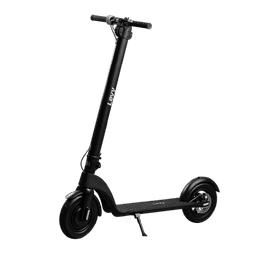
Levy Plus — Best Lightweight Commuter with Swappable Batteries


The Levy Plus solves the two biggest pain points of scooter commuting: weight and range anxiety. At just 30 pounds, it is one of the lightest full-featured commuter scooters available, making it genuinely easy to carry onto a bus, up a flight of stairs, or into an office. But the real game-changer is the swappable battery system. When your battery runs low, you pop it out and snap in a fresh one in about 10 seconds — no tools, no downtime, no hunting for an outlet.


This means your effective range is unlimited. Keep a charged spare in your backpack or desk drawer, and you never have to worry about running out of juice mid-commute. The 700W peak motor delivers 20 mph top speed, more than enough for urban commuting, and 10-inch pneumatic tires smooth out rough pavement. Triple braking (electronic, disc, and foot) gives you confident stopping power in traffic. IP55 water resistance handles rain and puddles without issue.


Priced between $629 and $749, the Levy Plus is an exceptional value for multimodal commuters who combine scooter riding with public transit. If portability is your top priority and you want the freedom of swappable batteries, this is the scooter to buy.


Spec Levy Plus
Price $629–749
Range 20 mi per battery (unlimited with spares)
Top Speed 20 mph
Weight 30 lbs
Motor 700W peak
Braking Triple (electronic + disc + foot)
Tires 10" pneumatic
Water Resistance IP55
Battery Swap Time ~10 seconds

NIU KQi3 Pro — Best Value Commuter Scooter


The NIU KQi3 Pro delivers a feature set that rivals scooters costing $200 to $300 more. With 31 miles of rated range, a 700W peak motor, and 9.5-inch tubeless pneumatic tires, it checks every box a commuter needs without the inflated price tag of premium brands. The 20-percent hill grade capability is a welcome spec for riders in hilly cities like San Francisco or Seattle — many scooters in this price range struggle above 15 percent.


Triple braking provides the redundancy that daily commuters need for safety, and the NIU app lets you customize ride settings, track your trips, and monitor battery health. At 44.75 pounds, it falls into the "roll don't carry" weight class, but the folding mechanism is solid and the stem locks securely for wheeling it folded. The tubeless pneumatic tires strike a good balance between ride comfort and puncture resistance, requiring less maintenance than traditional pneumatic tires with inner tubes.


If you want the best feature-to-price ratio without settling for a bare-bones scooter, the NIU KQi3 Pro is hard to beat between $599 and $699.


Spec NIU KQi3 Pro
Price $599–699
Range 31 miles
Top Speed 20 mph
Weight 44.75 lbs
Motor 700W peak
Tires 9.5" tubeless pneumatic
Hill Grade 20%
Braking Triple braking system
App NIU app (ride settings, trip tracking)

Gotrax G6 — Best Budget Commuter Scooter


The Gotrax G6 proves that a tight budget does not have to mean a miserable commute. Starting at $495, it delivers 25 to 35 miles of range, front and rear suspension, 10-inch pneumatic tires, and IP54 water resistance — specs that would have cost twice as much three years ago. The 500W motor tops out at 20 mph, which matches the speed limit in most urban scooter regulations.


Cruise control is a surprisingly useful commuter feature at this price. Set your speed on a long, flat stretch and give your throttle thumb a rest. The dual suspension system (front and rear) makes the G6 far more comfortable on rough roads than many budget competitors that skip suspension entirely. At 45 pounds, it is not the lightest option, but for a scooter you ride from your front door to your office door, the weight is manageable.


The G6 is the scooter to buy if you want to keep your purchase under $600 without sacrificing the core features that make scooter commuting practical and enjoyable.


Spec Gotrax G6
Price $495–599
Range 25–35 miles
Top Speed 20 mph
Weight 45 lbs
Motor 500W
Suspension Front + rear
Tires 10" pneumatic
Water Resistance IP54
Features Cruise control

Hiboy S2 Pro — Best Maintenance-Free Commuter Scooter


The Hiboy S2 Pro is built for commuters who want to ride every day without worrying about tire pressure, flats, or tube replacements. Its 10-inch solid honeycomb tires are completely puncture-proof — you will never be stranded on the side of the road with a flat. The dual rear suspension compensates for the slightly harsher ride that solid tires deliver compared to pneumatic ones, keeping things reasonably comfortable on typical city surfaces.


With 25 miles of range, a 500W motor reaching 19 mph, and a companion app for ride customization, the S2 Pro covers all the commuter essentials. At 36.4 pounds, it sits in a nice middle ground — light enough to carry up a short flight of stairs, but not so heavy that folding and unfolding feels like a workout. The price range of $425 to $650 (depending on the retailer and any ongoing promotions) makes it one of the most affordable scooters with solid tires and suspension.


Choose the Hiboy S2 Pro if your priority is a scooter that just works, day after day, with minimal maintenance beyond occasional brake adjustments and keeping the battery charged.


Spec Hiboy S2 Pro
Price $425–650
Range 25 miles
Top Speed 19 mph
Weight 36.4 lbs
Motor 500W
Tires 10" solid honeycomb (puncture-proof)
Suspension Dual rear
App Hiboy app (ride settings, lock)

TurboAnt V8 — Best Long-Range Commuter Scooter


The TurboAnt V8 is purpose-built for riders with longer commutes. Its dual removable batteries deliver up to 50 miles of combined range — the longest on this list — which means a 15-mile each-way commute still leaves you with a 20-mile buffer. Both batteries are removable, so you can charge them at your desk or in a locker without needing to bring the entire scooter inside. TurboAnt even includes dual chargers in the box, so you can charge both batteries simultaneously overnight.


The 450W motor delivers a 20 mph top speed, which is adequate for urban commuting though not the most powerful on this list. The 9.3-inch pneumatic tires and the scooter's 275-pound weight capacity make it a strong option for larger riders who are often overlooked by scooter manufacturers. At 47.6 pounds, it is on the heavier side, but the removable batteries mean you can lighten the load significantly if you need to carry the deck and batteries separately.


If your commute exceeds 10 miles each way, or if you regularly take detours and side trips after work, the TurboAnt V8's 50-mile range eliminates the constant mental math of battery management.


Spec TurboAnt V8
Price $800
Range Up to 50 miles (dual battery)
Top Speed 20 mph
Weight 47.6 lbs
Motor 450W
Tires 9.3" pneumatic
Weight Capacity 275 lbs
Charging Dual chargers included
Batteries Dual removable

Apollo City 2024 — Best Premium Commuter Scooter


The Apollo City 2024 is for commuters who want the best of everything and are willing to pay for it. With a 960Wh Samsung battery powering up to 43 miles of range and speeds up to 32 mph, it outperforms every other scooter on this list in raw capability. Built-in turn signals, regenerative braking, and IP66 water resistance (the highest on our list) make it arguably the safest scooter here for riding in traffic and bad weather.


The IP66 rating deserves special attention. While most commuter scooters can handle light rain, the Apollo City 2024 can withstand powerful water jets from any direction. For year-round commuters in rainy climates like Portland or Vancouver, this level of water protection provides genuine peace of mind. Regenerative braking extends your range while giving you smoother, more controlled deceleration than mechanical brakes alone.


The trade-offs are weight (57 to 65 pounds depending on configuration) and price ($1,499 to $1,699). This is not a scooter for carrying onto trains. But if your commute is a direct ride from home to a ground-level office, and you want a scooter that feels like a premium vehicle rather than a gadget, the Apollo City 2024 delivers a riding experience that justifies the investment.


Spec Apollo City 2024
Price $1,499–1,699
Range 23–43 miles
Top Speed 27–32 mph
Weight 57–65 lbs
Battery 960Wh Samsung
Water Resistance IP66
Safety Turn signals, regenerative braking

Unagi Model One Voyager — Best Design


The Unagi Model One Voyager is the scooter for riders who care about aesthetics as much as performance. Its magnesium and carbon fiber construction results in a 29.6-pound frame that looks like it was designed by an architecture firm rather than a scooter company. Dual 250W motors (front and rear) provide all-wheel traction, and the Voyager charges to 80 percent in just 2.2 hours — the fastest charging time on this list.


With 12 to 25 miles of range and a 20 mph top speed, the Voyager is best suited for shorter commutes of 5 miles or less each way. The range numbers are modest compared to competitors, but the rapid charging means you can top off during a lunch break and have plenty of juice for the ride home. The subscription option ($69 per month) is worth considering if you prefer not to commit $1,490 upfront — it includes maintenance and replacement coverage.


The Unagi Model One Voyager is the right scooter if your commute is short, your aesthetic standards are high, and you want a scooter that doubles as a conversation piece when you roll it into the office.


Spec Unagi Model One Voyager
Price $1,490 or $69/mo subscription
Range 12–25 miles
Top Speed 20 mph
Weight 29.6 lbs
Motors Dual 250W (front + rear)
Frame Magnesium + carbon fiber
Charging 80% in 2.2 hours
Purchase Options Buy or subscribe ($69/mo)

Best-For Quick Picks


Best Overall: Segway Ninebot Max G2 — 43-mile range, hydraulic suspension, self-healing tires, $800. The most complete package for daily commuters.


Best Budget: Gotrax G6 — Full suspension, 25–35 mile range, and cruise control starting at $495. Hard to find more scooter for the money.


Best Lightweight: Levy Plus — At 30 pounds with a 10-second battery swap, it is the best choice for riders who combine scootering with public transit or stairs.


Best Long-Range: TurboAnt V8 — Dual removable batteries deliver up to 50 miles. Includes two chargers so both batteries charge overnight.


Best Premium: Apollo City 2024 — IP66 waterproofing, turn signals, 32 mph top speed, and a 960Wh Samsung battery. The premium commuter experience.


Best Value: NIU KQi3 Pro — 31-mile range, 20% hill grade, and tubeless pneumatic tires between $599 and $699. Premium specs at a mid-range price.


Best Maintenance-Free: Hiboy S2 Pro — Solid honeycomb tires mean zero flats, ever. Dual rear suspension keeps the ride comfortable. From $425.


Need help deciding? Compare these scooters side by side using our interactive comparison tool.


What to Look for When Buying a Commuter Scooter


Range and Battery


Always buy more range than you think you need. Manufacturer-rated ranges are based on ideal conditions: flat terrain, 150-pound rider, moderate speed, no wind, and warm weather. In the real world, expect 20 to 40 percent less. If your round-trip commute is 10 miles, aim for a scooter rated at 20 miles or more. Riders with longer commutes should consider scooters with removable or swappable batteries like the Levy Plus or TurboAnt V8 for true range flexibility.


Weight and Portability


Think carefully about every segment of your commute. If you ride door to door, weight barely matters — a 60-pound scooter rolls just fine when folded. But if you need to carry your scooter up subway stairs, into an elevator, or onto a bus, every pound counts. Under 30 pounds is genuinely portable. Between 30 and 45 pounds is manageable for short carries. Above 45 pounds, plan on rolling only.


Tires


Your tire choice shapes your daily experience more than almost any other spec. Pneumatic (air-filled) tires offer the best ride quality and grip, especially on wet surfaces, but require occasional pressure checks and can get flats. Tubeless pneumatic tires reduce flat risk while keeping most of the comfort benefits. Solid tires (honeycomb or filled) are completely flat-proof but transmit more road vibration and provide less grip in wet conditions. For commuters on rough urban roads, pneumatic tires with suspension are the best combination.


Water Resistance


Commuters cannot choose when it rains. At minimum, look for IP54 (splashproof from any direction). IP55 and above handle heavy rain. IP66 (Apollo City 2024) handles torrential downpours. Even with high IP ratings, avoid riding through deep puddles — submersion is different from rain exposure. After riding in rain, dry your scooter and check that water is not pooling near charging ports.


Braking Systems


Dual brakes are a minimum for commuter use. Triple braking systems (electronic motor braking, disc brakes, and a foot brake) give you the most stopping options and redundancy. Regenerative braking, found on scooters like the Apollo City 2024, slows the scooter while feeding energy back to the battery — extending range and reducing brake pad wear. Test your brakes weekly and replace worn pads promptly. If you need brake service or other repairs, find a certified shop near you.


Safety and Visibility


Front and rear lights are non-negotiable for commuting, especially in winter when you may ride in the dark. Built-in turn signals (like the Apollo City 2024) significantly improve safety in traffic. Consider adding a wearable signal vest or handlebar-mounted turn signal if your scooter does not include them. A bell or horn, a helmet, and reflective clothing round out the essential safety kit for daily commuters.


Build Quality and Warranty


A commuter scooter takes daily abuse. Look for scooters from established brands that offer at least a one-year warranty on the frame and battery. Aluminum alloy frames resist corrosion better than steel. Aviation-grade aluminum (used by Segway and NIU) adds durability without excessive weight. Read owner reviews specifically for long-term reliability — a scooter that performs well on day one but develops stem wobble at month six is not a good commuter choice.


Frequently Asked Questions


How far can an electric scooter commute on a single charge?


Most commuter electric scooters offer between 20 and 50 miles of rated range per charge. However, real-world range is typically 20 to 40 percent less than the manufacturer rating due to hills, rider weight, wind, and temperature. For a 5-mile each-way commute (10 miles round trip), a scooter rated at 20 to 25 miles is sufficient. For longer commutes, the TurboAnt V8 offers up to 50 miles, and the Levy Plus offers unlimited range through its 10-second battery swap system.


Are electric scooters legal for commuting?


Electric scooter laws vary by state, city, and country. In most US cities, electric scooters with top speeds of 20 mph or less are legal to ride on roads and bike lanes. Some jurisdictions require helmets, registration, or a minimum rider age. Check your local regulations before purchasing. All eight scooters on this list comply with the 20 mph speed limit common in most US jurisdictions, though the Apollo City 2024 can exceed this and should be speed-limited in areas with caps.


Can I ride an electric scooter in the rain?


Yes, if your scooter has adequate water resistance. All scooters on this list are rated IP54 or higher, meaning they can handle rain. The Apollo City 2024 (IP66) offers the best wet-weather protection. However, even waterproof scooters should be dried after riding in rain, and you should avoid deep puddles that could submerge the deck or motor. Wet roads also reduce tire grip, so brake earlier and ride more conservatively in rain.


How much does a good commuter electric scooter cost?


A reliable commuter scooter costs between $425 and $1,700 in 2026. Budget options like the Gotrax G6 ($495) and Hiboy S2 Pro ($425) deliver solid commuter performance. Mid-range scooters like the NIU KQi3 Pro ($599–699) and Levy Plus ($629–749) offer the best value for most riders. Premium scooters like the Apollo City 2024 ($1,499–1,699) add advanced safety features and superior build quality. Most commuters find the $600 to $800 range offers the best balance of features and price.


How long does an electric scooter battery last before needing replacement?


Most electric scooter batteries last 500 to 1,000 charge cycles before capacity drops noticeably. At one charge per day, five days a week, that translates to roughly 2 to 4 years of commuter use before you notice reduced range. You can extend battery life by avoiding full discharges (charge when the battery drops to 20 to 30 percent), storing the scooter in moderate temperatures, and using the manufacturer's recommended charger. Scooters with removable batteries like the Levy Plus and TurboAnt V8 make replacement easier and cheaper when the time comes.


What is the best electric scooter for a heavy rider?


The TurboAnt V8 has the highest weight capacity on this list at 275 pounds. The Segway Ninebot Max G2 supports up to 265 pounds. Most scooters on this list support 220 to 265 pounds. If you are near or above the weight limit, expect reduced range and acceleration. Choose a scooter where your weight is well below the maximum capacity — riding at the limit stresses the motor, battery, and frame, and significantly reduces braking performance.


Should I get pneumatic or solid tires for commuting?


Pneumatic (air-filled) tires are better for most commuters. They provide superior grip on wet and dry surfaces, absorb road vibrations, and deliver a more comfortable ride. The downside is occasional flats and the need to check tire pressure regularly. Solid tires eliminate flats entirely but vibrate more and offer less grip, especially when wet. Tubeless pneumatic tires (like on the Segway G2 and NIU KQi3 Pro) offer a middle ground with reduced flat risk. If you ride on well-maintained roads and hate maintenance, solid tires (Hiboy S2 Pro) are a good choice. If comfort and grip matter more, go pneumatic.


Can I take my electric scooter on public transit?


Most public transit systems allow folded electric scooters during off-peak hours, but policies vary by city and transit agency. The key factor is weight. Scooters under 30 pounds — the Levy Plus (30 lbs) and Unagi Model One Voyager (29.6 lbs) — are the most practical for transit. Some agencies prohibit scooters during rush hour or ban them from buses while allowing them on trains. Check your local transit authority's rules, and practice folding and carrying your scooter before committing to a multimodal commute.


How do I prevent my electric scooter from being stolen?


Use a U-lock or heavy-duty cable lock rated for bicycle security. Lock your scooter through the frame (not just the wheel) to a fixed object. The Segway Ninebot Max G2's Apple Find My integration lets you track your scooter if it does go missing. Additional theft-prevention measures include removing the battery when parked (possible on the Levy Plus and TurboAnt V8), using a GPS tracker, and registering your scooter's serial number. When possible, bring your scooter inside rather than locking it outside — no lock is theft-proof.


How much money can I save by commuting on an electric scooter?


The average American spends $10,000 to $12,000 per year on car commuting costs (gas, insurance, parking, maintenance, and depreciation). Even public transit riders spend $1,200 to $2,400 per year on passes. An electric scooter costs $2 to $5 per month in electricity to charge daily. After the initial purchase price of $500 to $800 for a quality commuter scooter, your ongoing costs are minimal — occasional tire and brake maintenance, plus electricity. Most scooter commuters recoup their purchase price within 2 to 4 months of replacing car or rideshare trips.

Ready to Get Started?

Discover the perfect electric scooter for your daily commute.

Explore Our Scooters