


Best Electric Scooters Under $500 in 2026: 8 Budget Picks Tested

The best electric scooters under $500 in 2026, from the $227 Gotrax GXL V2 to the $499 Levy Plus. We compare specs, real-world range, and value across 8 budget-friendly options.

3407 words

The best electric scooter under $500 in 2026 is the NAVEE GT3 ($399), which delivers 19 miles of real-world range, dual suspension, and UL 2272 certification at a price that undercuts most competitors. The Levy Plus ($499) is the best choice if you need swappable batteries for unlimited range, and the Segway Ninebot E2 Pro ($430) wins on brand reliability with Apple Find My integration and puncture-resistant tires.


Table of Contents


Comparison Table: All 8 Picks Side-by-Side


Scooter Price Real Range Top Speed Weight Motor Tires Best For
NAVEE GT3 $399 ~19 mi 20 mph 47.8 lbs 350W / 700W peak 10" tubeless pneumatic Best Overall
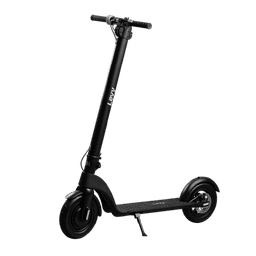
Levy Plus $499 20 mi (40 mi w/ spare) 20 mph 30 lbs 350W / 700W peak 10" pneumatic Swappable Battery
Segway Ninebot E2 Pro $430 ~21.7 mi 18.6 mph 41.4 lbs 350W / 750W peak 10" tubeless puncture-resistant Brand Reliability
NIU KQi 100F $449 ~18 mi 17.4 mph 38.8 lbs 300W / 600W peak 9.5" pneumatic Comfort
Gotrax G4 $399 ~16 mi 20 mph 36 lbs 500W 10" pneumatic Speed
Hiboy S2 $299 ~17 mi 19 mph 31.9 lbs 350W 8.5" solid honeycomb Best Under $300
TurboAnt X7 Max $400 ~21 mi 20 mph 34.2 lbs 350W 10" pneumatic Range
Gotrax GXL V2 $227 ~12.5 mi 15.5 mph 26.5 lbs 250W 8.5" pneumatic Ultra-Budget

All range figures reflect real-world riding conditions (mixed terrain, 160-180 lb rider, moderate speed). Manufacturer claims are typically 30-40% higher than what you will actually experience. We have adjusted accordingly throughout this guide.


Best Overall: NAVEE GT3 ($399)


The NAVEE GT3 is the most impressive electric scooter you can buy under $500 in 2026. At $399, it delivers a feature set that would have cost $700 or more just two years ago: dual suspension, 10-inch tubeless pneumatic tires, IPX5 water resistance, traction control, and UL 2272 safety certification. The 48V 367Wh battery provides roughly 19 miles of real-world range, which is enough for most round-trip commutes under 10 miles.


The 350W motor (700W peak) pushes you to a genuine 20 mph top speed, and the dual suspension system does an excellent job absorbing cracks, potholes, and rough pavement. At 47.8 lbs, the GT3 is the heaviest scooter on this list, which makes it less ideal for people who need to carry it up stairs or onto public transit. But that weight contributes to a stable, planted ride quality that lighter scooters simply cannot match.


The traction control system is a standout feature at this price. It prevents wheel spin on wet or loose surfaces, which is a safety feature typically reserved for scooters costing $800 and up. Combined with the IPX5 rating, you can confidently ride in light rain without worrying about losing control or damaging the electronics. If you want the most scooter for your money and weight is not a dealbreaker, the NAVEE GT3 is the clear winner.


Best Swappable Battery: Levy Plus ($499)


The Levy Plus solves the biggest problem with budget electric scooters: range anxiety. Its swappable battery system lets you carry a spare 460Wh battery in a backpack and swap it in under 10 seconds, effectively doubling your range to 40 miles. No other scooter under $500 offers this capability. For delivery drivers, long-distance commuters, or anyone who cannot afford to run out of battery mid-trip, this is a game-changing feature.


At 30 lbs, the Levy Plus is also the lightest full-featured scooter on this list, making it easy to carry up a flight of stairs or tuck under a desk. The 350W motor (700W peak) hits 20 mph, and the 10-inch pneumatic tires provide a smooth ride on city streets. The triple braking system (electronic, disc, and foot brake) gives you redundant stopping power that inspires real confidence in traffic.


What truly sets Levy apart is its US-based customer support. While most budget scooter brands route support through overseas call centers with weeks-long response times, Levy operates out of the United States and ships replacement parts domestically. If something goes wrong, you are not waiting a month for a part from Shenzhen. The Levy Plus is available directly from the Levy shop with free shipping and a satisfaction guarantee.


Best Brand Reliability: Segway Ninebot E2 Pro ($430)


Segway is the most recognized name in personal electric vehicles, and the Ninebot E2 Pro lives up to that reputation. At $430, it offers 21.7 miles of range, a 350W motor (750W peak), and 10-inch tubeless puncture-resistant tires. The Apple Find My integration is a genuinely useful anti-theft feature: if someone walks off with your scooter, you can track it from your iPhone the same way you would track AirPods.


The E2 Pro's traction control system monitors wheel slip in real time and adjusts motor output to maintain grip, which is especially valuable on wet roads or painted crosswalk lines. The 41.4 lbs weight is manageable for most adults, and the folding mechanism is straightforward and secure. The 18.6 mph top speed is slightly below the 20 mph standard set by competitors, but Segway optimizes for a smooth, consistent power curve rather than raw speed.


Where Segway really earns its premium is in build quality and after-sales support. The company has an extensive network of authorized service centers, a well-stocked parts inventory, and responsive customer service. The Segway app provides firmware updates, ride statistics, and customizable speed settings. If you value peace of mind and brand backing over squeezing out every last spec, the E2 Pro is your scooter.


Best Comfort: NIU KQi 100F ($449)


NIU is a Chinese electric vehicle company that sells more than a million e-bikes and scooters per year globally, and the KQi 100F reflects that scale and engineering expertise. At $449, it is built around rider comfort: the 9.5-inch pneumatic tires absorb road imperfections, the wide deck provides a stable standing platform, and the foldable handlebars make storage easier than any other scooter in this category.


The 300W motor (600W peak) is the least powerful on this list, topping out at 17.4 mph. That is fine for casual commuting but may feel sluggish on hills or if you weigh over 180 lbs. The 18-mile real-world range is adequate for most daily use. Where the KQi 100F stands out is in the details: integrated turn signals (a rarity under $500), a 2-year warranty (double the industry standard), and a polished app experience for ride tracking and firmware updates.


At 38.8 lbs, the KQi 100F sits in the middle of the pack for weight. The foldable handlebar design reduces its footprint significantly when stored in a closet or car trunk. If your priority is a comfortable, well-built scooter from a reputable brand and you are not chasing top speed numbers, the NIU KQi 100F is an excellent choice.


Best Speed: Gotrax G4 ($399)


The Gotrax G4 packs a 500W motor into a 36 lb frame, making it the most powerful scooter under $400 on this list. It hits a true 20 mph top speed and holds that speed more consistently on inclines than the 350W competitors. The 10-inch pneumatic tires and 25-mile claimed range (roughly 16 miles in real-world conditions) make it a credible daily commuter.


The G4 includes two features you rarely see at this price: a digital code lock built into the display (so you can leave it briefly without it being ridden away) and a detachable battery for off-scooter charging. The detachable battery is not swappable like the Levy Plus system (you cannot carry a spare and hot-swap), but it is convenient if you live in an apartment and do not want to haul the entire scooter inside to charge.


Gotrax has been in the budget scooter game since 2017 and has built a solid reputation for value. The G4's build quality is good for the price, though the folding mechanism feels less premium than Segway or NIU. If raw speed and motor power are your top priorities at this price, the Gotrax G4 delivers.


Best Under $300: Hiboy S2 ($299)


The Hiboy S2 is the best electric scooter you can buy for under $300. At $299, it offers 17 miles of range, a 19 mph top speed, and 8.5-inch solid honeycomb tires that are completely flat-proof. For budget-conscious commuters who do not want to deal with tire maintenance, the solid tires are a significant advantage. You will never need to carry a patch kit or pump.


The 350W motor provides enough power for flat terrain and gentle hills, though it struggles on steep grades with heavier riders. The rear suspension helps compensate for the firm ride that solid tires typically produce, and the dual braking system (disc brake plus regenerative electronic brake) provides reliable stopping power. At 31.9 lbs, it is easy to carry and fold.


The Hiboy app adds useful features like speed mode selection, cruise control activation, and ride history. The S2 has been on the market for several years and has accumulated thousands of reviews, which means replacement parts are widely available and common issues are well-documented. If you want a reliable daily rider without spending more than $300, the Hiboy S2 is the obvious pick.


Best Range: TurboAnt X7 Max ($400)


The TurboAnt X7 Max claims 32 miles of range, and in real-world testing delivers roughly 21 miles, which is the highest real-world range of any scooter on this list at its price point. The 350W motor and 10-inch pneumatic tires handle city streets well, and the removable battery allows for convenient off-scooter charging.


The X7 Max's standout spec is its 275 lb weight capacity, the highest on this list. If you are a larger rider who has been told by other scooter brands that you are at or over the weight limit, the X7 Max is built to handle you comfortably. The 34.2 lbs frame keeps things manageable for carrying, and the folding mechanism is quick and secure.


TurboAnt is a smaller brand than Segway or Gotrax, but they have built a loyal following by focusing on range and value. Customer support is responsive, and parts are available through their website. If maximizing miles per charge is your primary concern, especially if you have a longer commute, the X7 Max delivers more range per dollar than any competitor.


Best Ultra-Budget: Gotrax GXL V2 ($227)


The Gotrax GXL V2 is the cheapest electric scooter we can recommend without reservation. At $227, it provides 12.5 miles of range, a 15.5 mph top speed, and 8.5-inch pneumatic tires. The 250W motor is modest, but it is enough for flat commutes under 5 miles. Cruise control is a nice touch at this price, reducing hand fatigue on longer rides.


At 26.5 lbs, the GXL V2 is the lightest scooter on this list, making it the easiest to carry upstairs or onto a bus. The trade-offs are real: the range is limited, the motor struggles on hills, and there is no suspension. You will feel every crack in the pavement. But for short last-mile commutes or campus transportation, it gets the job done at a price that is hard to argue with.


Below $200, scooter quality drops off a cliff. You start seeing toy-grade construction, unreliable batteries, and non-existent customer support. The GXL V2 at $227 is the floor for a scooter we would trust for daily transportation. If you are on a strict budget, start here and skip the no-name Amazon options.


Price Tier Breakdown


Under $200: Not Recommended


Electric scooters under $200 are fundamentally toy-grade products. You will typically get 5-10 miles of range, 10-15 mph top speeds, weak 200W motors, and flimsy construction. Batteries in this range often degrade significantly within 6 months, and customer support from the no-name brands selling at this price point is effectively nonexistent. We do not recommend any scooter in this tier for daily transportation. Save up for at least the $200-350 range.


$200-350: Real Commuters Begin


This is where electric scooters become genuinely useful transportation. You get 12-19 miles of real range, 15-19 mph top speeds, dual braking systems, and app connectivity. The Hiboy S2 ($299) and Gotrax GXL V2 ($227) are the standouts here. Both come from established brands with replacement parts availability and responsive support. Scooters in this range work well for commutes under 7 miles on relatively flat terrain.


$350-500: The Sweet Spot


This is where the value proposition peaks. For $350-500, you get 18-31 miles of real range, 18-20 mph speeds, dual suspension, IPX4-IPX5 water resistance, and UL safety certification. The NAVEE GT3 ($399) and Levy Plus ($499) represent the best of this tier. You are getting 80% of the performance of scooters costing $800-1000, at half the price. For most riders, this tier provides everything they need without paying for features they will never use.


What You Give Up Under $500 vs $500-1000


Budget scooters have gotten remarkably good, but there are real trade-offs compared to the $500-1000 tier. Here is an honest breakdown of what you sacrifice by staying under $500:


Category Under $500 $500-1000
Real-World Range 15-22 miles 25-40 miles
Motor Power 350-500W single motor 500-1000W, dual motor options
Suspension Basic spring or none Hydraulic or adjustable
Braking Mechanical disc + e-brake Hydraulic disc brakes
Water Resistance IPX4-IPX5 IPX5-IPX7
Top Speed 18-20 mph 25-32 mph
Warranty 6 months - 1 year 1-2 years

The biggest difference is range. If your commute is under 10 miles each way, a sub-$500 scooter handles it fine. But if you are regularly riding 15+ miles in a single trip, you will be cutting it close on battery and may want to invest in the $500-1000 tier, or choose the Levy Plus with its swappable battery system to extend range without upgrading price tiers.


Suspension is the other major difference. Budget scooters use basic coil springs (or no suspension at all), which means you feel potholes and rough pavement more directly. The NAVEE GT3 is the notable exception with its dual suspension, but even it cannot match the hydraulic or adjustable suspension found on premium scooters. If you ride on rough roads daily, the upgrade to a $600-800 scooter with quality suspension is worth considering.


For most urban commuters riding 3-8 miles on paved roads, a sub-$500 scooter delivers 90% of the experience at 50% of the cost. The gap between budget and mid-range scooters has narrowed dramatically since 2024, and the best picks on this list would have been considered mid-range scooters just two years ago.


Best For: Quick Picks


If You Need... Get This Why
Best overall value NAVEE GT3 ($399) Dual suspension, UL certified, traction control at $399
Unlimited range Levy Plus ($499) Swap batteries in 10 seconds for 40+ miles
Maximum brand trust Segway E2 Pro ($430) Apple Find My, best service network
Smoothest ride NIU KQi 100F ($449) 9.5" pneumatic tires, foldable bars, turn signals
Most power under $400 Gotrax G4 ($399) 500W motor, digital lock, detachable battery
Best under $300 Hiboy S2 ($299) Flat-proof tires, 19 mph, app control
Longest range TurboAnt X7 Max ($400) ~21 real miles, 275 lb capacity
Tightest budget Gotrax GXL V2 ($227) Cheapest we recommend, 26.5 lbs
Heavy rider (250+ lbs) TurboAnt X7 Max ($400) 275 lb capacity, highest on list
Carrying upstairs daily Gotrax GXL V2 ($227) Lightest at 26.5 lbs
Rainy conditions NAVEE GT3 ($399) IPX5 + traction control

Frequently Asked Questions


What is the best electric scooter under $500 in 2026?


The NAVEE GT3 at $399 is the best overall electric scooter under $500 in 2026. It offers dual suspension, 10-inch tubeless pneumatic tires, traction control, IPX5 water resistance, and UL 2272 certification. For riders who prioritize swappable batteries and US-based support, the Levy Plus at $499 is the best alternative.


How far can a $500 electric scooter actually go on one charge?


Most electric scooters priced between $350-500 deliver 15-22 miles of real-world range. Manufacturers typically advertise 25-35 miles, but those numbers assume ideal conditions: a lightweight rider, flat terrain, eco mode, and warm weather. Expect to get 60-70% of the advertised range in normal riding conditions. The Levy Plus is the exception, offering up to 40 miles with a spare swappable battery.


Are cheap electric scooters safe to ride?


Electric scooters from established brands like Segway, NAVEE, Gotrax, Hiboy, NIU, Levy, and TurboAnt are safe when used properly. Look for UL 2272 certification, which tests the electrical and battery systems for fire safety. Avoid no-name brands on Amazon and scooters priced under $200, which may use uncertified battery cells. Always wear a helmet, use lights at night, and follow local traffic laws.


Can you ride an electric scooter in the rain?


Scooters with IPX4 or higher water resistance ratings can handle light rain and wet roads. The NAVEE GT3 (IPX5) is the most water-resistant option on this list and includes traction control for wet surfaces. However, no budget scooter is designed for heavy downpours or standing water. Avoid riding through deep puddles, and always dry your scooter after wet rides. Braking distance increases significantly on wet pavement regardless of the scooter model.


How long do budget electric scooter batteries last before needing replacement?


Most lithium-ion batteries in budget electric scooters last 300-500 full charge cycles before capacity drops noticeably. At one charge per day, that translates to roughly 1-2 years before you see a meaningful range reduction. You will not wake up one day with a dead battery; instead, your 20-mile range will gradually shrink to 15, then 12 miles over time. Proper care (avoiding full discharges, not leaving the scooter in extreme heat, and charging to 80% for daily use) can extend battery life to 3+ years.


What is the difference between solid tires and pneumatic tires on electric scooters?


Pneumatic (air-filled) tires provide a smoother ride, better traction, and superior braking performance, but they can get flat. Solid tires (including honeycomb designs like the Hiboy S2) are maintenance-free and flat-proof but transmit more road vibration and offer less grip. For most riders, pneumatic tires are the better choice because the ride quality difference is significant. If you frequently ride over broken glass or debris, solid tires save you the hassle of patching flats.


Do I need suspension on an electric scooter?


If you ride on smooth, well-maintained roads, suspension is nice but not essential. Large 10-inch pneumatic tires absorb small bumps adequately on their own. If you ride on cracked sidewalks, cobblestone, or poorly maintained urban roads, suspension makes a dramatic difference in comfort and control. The NAVEE GT3 is the only scooter under $500 with dual suspension, which is one reason it earns our top pick. Riders on smooth roads can save money with a non-suspended model.


How fast do electric scooters under $500 go?


Most electric scooters in the $350-500 range top out at 18-20 mph. Budget models under $300 typically max out at 15-19 mph. These speeds are appropriate for bike lanes and urban streets. Scooters over $500 can reach 25-32 mph, but higher speeds also mean higher risk. For city commuting, 18-20 mph is generally the practical sweet spot where you can keep up with bicycle traffic without exceeding safe stopping distances.


Is it worth buying a more expensive electric scooter?


It depends on your use case. If you commute under 10 miles on paved roads, a sub-$500 scooter handles everything you need. The $500-1000 tier makes sense if you need 25+ miles of range, ride on rough terrain, commute in heavy rain regularly, or want hydraulic brakes and adjustable suspension. The diminishing returns start around $800 for casual commuters. Spending $1000+ is justified primarily for off-road use, extreme range needs, or dual-motor hill-climbing performance.


What brands of electric scooters should I avoid?


Avoid Swagtron (poor build quality and declining support), Evercross (significantly inflated spec claims), and any no-name brand selling on Amazon for under $200. Red flags include: no physical US address, specs that seem too good for the price (40-mile range for $150 is a lie), no UL certification mentioned, and reviews that look artificially uniform. Stick with established brands like Segway, NAVEE, Gotrax, Hiboy, NIU, Levy, and TurboAnt that have proven track records and accessible customer support.

Ready to Get Started?

Discover the perfect electric scooter for your daily commute.

Explore Our Scooters