





Understanding the E6 Error Code on Your Electric Scooter
E6 error indicates battery undervoltage or communication failure. Fix with charging, connection cleaning, voltage testing, BMS reset, or battery replacement ($80-$300).
The E6 error code on electric scooters primarily indicates battery undervoltage or battery communication failure, affecting approximately 20% of all scooter error codes. E6 most commonly signals that battery voltage has dropped below the controller's minimum operating threshold (typically 60-70% of nominal voltage), battery BMS (Battery Management System) communication has failed, or battery cells are severely imbalanced. This error prevents scooter operation as a safety mechanism to protect the battery and controller from damage. Resolution requires checking battery charge level, inspecting battery connections, testing battery voltage with multimeter, resetting the BMS, examining wiring for damage, and potentially replacing the battery if cells have degraded. Most E6 errors resolve through charging, connection cleaning, or simple resets, but persistent E6 after full charge indicates battery replacement needs ($80-$300 depending on capacity). Understanding E6 variations across brands (Levy, Gotrax, Xiaomi, Hiboy, Horizon) enables targeted troubleshooting.
What Does E6 Error Code Mean?
E6 error code indicates battery-related problems that prevent the scooter's electrical system from functioning properly.
Primary Causes of E6 Error
Three main battery issues trigger E6 errors:
- Battery undervoltage (70% of cases): Battery voltage dropped below minimum threshold, caused by excessive discharge, battery age/degradation, or faulty charging
- Battery communication failure (20%): BMS cannot communicate with controller, due to loose connections, damaged wiring, or BMS malfunction
- Battery cell imbalance (10%): Individual cells within battery pack show significant voltage differences, indicating aging battery or BMS failure
Brand-Specific E6 Error Meanings
E6 error definitions vary by manufacturer:
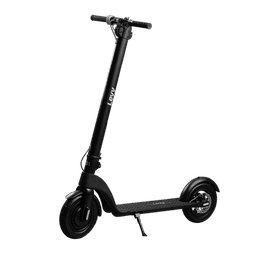
- Levy Electric scooters: E6 indicates battery issue requiring replacement
- Gotrax models: E6 signals controller, battery, or motor issues—replace controller first, then battery, then motor if unresolved
- Xiaomi/Ninebot scooters: E06 represents battery undervoltage (discharged below acceptable threshold)
- Horizon scooters: Error code 06 means battery discharged below voltage threshold
- Hiboy scooters: E6 typically indicates battery communication failure or undervoltage
- Weebot scooters: E06 indicates battery undervoltage problem
Always consult your model's manual as E6 can have unique meanings for different brands.
Symptoms Accompanying E6 Error
E6 error typically appears with these symptoms:
- Scooter won't power on or immediately shuts off after powering on
- Display shows E6/E06 code instead of normal readouts
- Battery indicator shows empty or erratic readings despite charging
- Scooter powers on but motor won't engage when throttle pressed
- Intermittent power loss followed by E6 code appearance
- Charging indicator doesn't illuminate when charger connected
- Scooter worked fine, then suddenly displayed E6 without warning
- E6 appears after extended storage (1+ months without charging)
Step-by-Step E6 Error Troubleshooting
Follow these steps systematically to diagnose and resolve E6 errors:
Step 1: Charge Battery Fully
E6 most commonly indicates depleted battery—charging resolves 40-50% of cases.
Charging procedure:
- Turn off scooter completely
- Connect original charger to scooter charging port
- Plug charger into wall outlet (verify outlet works with another device)
- Check charger indicator light: Red/orange = charging, green = full charge
- Allow minimum 6-8 hours charging (overnight recommended)
- Verify charger LED turns green indicating full charge
- Disconnect charger, wait 2 minutes
- Power on scooter and test
If charger doesn't indicate charging:
- Verify charger output with multimeter (should match battery voltage: 36V charger = 42V output, 48V charger = 54V output)
- Check charging port for dirt, corrosion, or damage—clean with isopropyl alcohol
- Try different wall outlet to rule out electrical issue
- If charger non-functional, replace charger ($20-$40) before assuming battery problem
Step 2: Perform System Reset
Simple resets clear temporary BMS communication errors in 15-20% of E6 cases.
Standard reset procedure:
- Turn off scooter using power button
- Wait 5 minutes (allows all capacitors to discharge, system to fully reset)
- Turn scooter back on
- Check if E6 error persists
Deep reset procedure (if standard reset fails):
- Turn off scooter
- Disconnect battery completely: Open deck compartment, unplug battery connector from controller
- Press power button 5-10 times while battery disconnected (drains residual power)
- Wait 10 minutes
- Reconnect battery connector firmly (ensure it clicks/seats fully)
- Power on scooter and test
Step 3: Inspect Battery and Wiring Connections
Loose or corroded connections cause 25% of E6 errors.
Connection inspection procedure:
- Power off scooter and unplug charger
- Access battery compartment: Remove deck cover (typically 4-8 screws on underside)
- Locate battery connector: Large multi-pin connector between battery and controller
- Inspect for issues:
- Corrosion (green/white residue on pins)
- Bent or damaged pins
- Loose connection (connector not fully seated)
- Melted plastic (indicates overheating/short circuit)
- Disconnect battery connector: Note orientation before unplugging
- Clean contacts: Use contact cleaner or isopropyl alcohol (90%+) on cotton swab, clean both male and female pins thoroughly
- Check battery wiring: Inspect wires from battery to connector for cuts, fraying, pinching, or damage
- Reconnect firmly: Align connector properly, push until it clicks/seats completely
- Secure deck cover: Replace cover, tighten all screws
- Test scooter
Step 4: Test Battery Voltage
Multimeter testing reveals whether battery is actually charged or has failed.
Voltage testing procedure:
- Set multimeter to DC voltage mode: Select range 0-60V or auto-ranging
- Access battery terminals: Open deck, locate battery connector
- Measure battery voltage: Touch red probe to positive (+), black probe to negative (−)
- Compare to specifications:
- 36V battery: Should read 41-42V when fully charged, 30-33V when depleted
- 48V battery: Should read 54-55V when fully charged, 40-43V when depleted
- Below minimum voltage: If 36V battery reads below 30V or 48V reads below 40V, battery critically discharged or damaged
- Charge and retest: If voltage low, charge fully and retest
- Voltage drops under load: If voltage normal at rest but drops significantly when throttle engaged, battery cells degraded (replacement needed)
Voltage interpretation:
- Normal voltage after charging: E6 likely caused by BMS communication issue or controller problem
- Low voltage that won't rise after charging: Battery cells failed, replacement required
- Voltage fluctuates erratically: BMS malfunction or cell imbalance
Step 5: Inspect All Electrical Wiring
Damaged wiring between battery and controller triggers E6 errors.
Wiring inspection points:
- Battery to controller wiring: Main power wires (thick, usually red and black)
- BMS communication wires: Thin wire bundle alongside main power wires
- Common damage locations:
- Where wires enter battery case (flexing damage)
- Folding mechanism area (wires get pinched when scooter folds)
- Deck entry points (water intrusion causes corrosion)
- Near controller compartment (heat damage)
- Signs of damage:
- Frayed insulation exposing bare copper
- Wires pinched by frame or folding mechanism
- Burnt or melted insulation (indicates short circuit)
- Wires pulled loose from connector pins
- Green corrosion on copper (water damage)
Repair damaged wiring: Simple cuts/frays can be spliced with solder and heat shrink tubing. Extensive damage requires professional repair or wiring harness replacement ($30-$80).
Step 6: Reset Battery Management System (BMS)
BMS manages battery cells and can enter error state requiring reset.
BMS reset methods (vary by scooter model):
Method 1: Charger activation reset
- Ensure scooter is off
- Connect charger to scooter
- While holding power button, plug charger into wall outlet
- Continue holding power button for 10-15 seconds
- Release button, unplug charger, wait 2 minutes
- Turn on scooter and test
Method 2: Accelerator reset (Gotrax and similar models)
- Turn scooter on
- Press accelerator/throttle rapidly 5 times in succession
- This initiates system reset
- Turn scooter off, wait 10 seconds
- Turn on and test
Method 3: Deep BMS reset
- Fully discharge battery (ride until scooter stops)
- Leave disconnected from charger for 24 hours
- Charge to 100% without interruption (8-12 hours)
- This recalibrates BMS and cell balancing
Step 7: Check Controller Functionality
Controller failures can trigger E6 errors (less common, approximately 10% of cases).
Controller diagnostics:
- Visual inspection: Open controller compartment, look for burnt components, melted plastic, water damage, or corrosion
- Overheating check: Feel controller case after riding—if extremely hot (too hot to touch), may indicate controller failure
- Connection check: Verify all controller connections (battery, motor, throttle, display, brake) firmly seated
- Swap test (advanced): If have access to compatible controller, swap to determine if controller or battery is faulty
When Battery Replacement Is Needed
Persistent E6 errors after troubleshooting indicate battery failure requiring replacement.
Signs Battery Replacement Necessary
Indicators that battery has reached end of life:
- E6 error persists after full charge cycle
- Battery voltage tests low (below 30V for 36V system, below 40V for 48V) even after charging
- Voltage drops dramatically under load (10+ volts when throttle engaged)
- Battery won't hold charge (drains to 0% within hours when not in use)
- Charging time dramatically shortened (charges "fully" in 1-2 hours vs. normal 6-8 hours)
- Battery physically swollen, damaged, or leaking
- Scooter range reduced to 20-30% of original (e.g., 15 miles new, now only 3-5 miles)
- Battery age over 3-4 years or 500+ charge cycles
Battery Replacement Costs
Replacement battery pricing by capacity and brand:
- Budget scooter batteries (36V 5-7.5Ah): $80-$150
- Mid-range batteries (36V 10-15Ah or 48V 10Ah): $150-$250
- High-capacity batteries (48V 15-20Ah+): $250-$500
- OEM brand-specific batteries: Add 20-40% premium over generic equivalents
Installation:
- DIY installation: Moderate difficulty—requires unplugging old battery, routing new battery, connecting wires
- Professional installation: $30-$60 labor if uncomfortable with DIY
Choosing Replacement Battery
Ensure replacement battery compatibility:
- Match voltage exactly: 36V scooter requires 36V battery (never mix voltages)
- Capacity (Ah): Can upgrade to higher Ah for more range (ensure physical fit in compartment)
- Connector type: Must match existing connector or include adapter
- Physical dimensions: Measure existing battery compartment before ordering
- BMS compatibility: Ensure BMS matches controller specifications (most universal, but verify with seller)
- Brand recommendations: Stick with OEM batteries or reputable third-party brands (avoid ultra-cheap no-name batteries from unknown sellers—fire risk)
Preventing Future E6 Errors
Proper battery maintenance reduces E6 error frequency and extends battery life:
- Never fully discharge battery: Stop riding when battery indicator shows 10-15% remaining, deep discharge damages lithium cells
- Charge regularly: Charge after every ride or when battery drops below 30%, don't leave battery depleted for extended periods
- Store properly: If storing scooter 1+ months, charge battery to 50-60%, disconnect battery from scooter, store in cool (50-77°F), dry location
- Avoid temperature extremes: Don't store or charge in freezing temperatures (below 32°F) or extreme heat (above 95°F)
- Use original charger: Third-party chargers may provide incorrect voltage/current damaging battery
- Don't overcharge: Unplug charger once fully charged (green light), leaving plugged in 24+ hours can degrade battery
- Keep connections clean: Every 2-3 months, check battery connector for corrosion, clean with contact cleaner
- Protect from water: Avoid riding in heavy rain, never submerge scooter in water, use dielectric grease on connections for moisture protection
- Monthly full cycle: Once per month, discharge to 20% then charge to 100% (recalibrates BMS)
When Controller Replacement Is Needed
If battery tests good but E6 persists, controller may be faulty.
Signs of Controller Failure
Symptoms indicating controller problem rather than battery:
- Battery voltage tests normal (42V for 36V system, 54V for 48V) but E6 still appears
- All connections cleaned, secured, and tested but error continues
- Controller physically damaged (burnt components, melted plastic, water intrusion visible)
- Controller extremely hot during operation (overheating/thermal failure)
- Multiple error codes appearing (E6 plus others like E1, E2, E3 simultaneously)
Controller Replacement Costs
Controller replacement pricing:
- Budget scooter controllers: $40-$80
- Mid-range controllers (500-800W): $80-$150
- High-power controllers (1000W+): $150-$300
- OEM brand-specific: Add 30-50% premium
Installation complexity: Moderate to advanced—requires disconnecting all controller connections (battery, motor phase wires, hall sensors, throttle, display, brake, lights), installing new controller, reconnecting all in correct order. Professional installation: $60-$120 labor.
When to Seek Professional Help
Consider professional repair service if:
- Completed all troubleshooting steps but E6 persists
- Uncomfortable working with electrical components or opening scooter
- Multimeter testing beyond your skill level
- Need to determine definitively whether battery or controller is faulty before spending $80-$300 on parts
- Scooter still under warranty (DIY repair often voids warranty)
- Wiring damage extensive requiring professional rewiring
- Multiple error codes appearing simultaneously
Professional repair costs: $60-$100 diagnosis fee (often applied to repair), $80-$150 labor plus parts. Warranty consideration: If scooter under manufacturer warranty (typically 6-12 months), contact brand support before attempting repairs—DIY work voids most warranties.
Conclusion
E6 error code indicates battery undervoltage or battery communication problems that prevent scooter operation. Most E6 errors (60-70%) resolve through simple solutions: fully charging the battery, performing system reset, cleaning battery connections, and inspecting wiring for damage. Multimeter voltage testing definitively determines battery health—36V batteries should read 41-42V when charged, 48V batteries 54-55V. Persistent E6 after full charge indicates battery failure requiring replacement ($80-$300 depending on capacity).
Less commonly (10-15%), E6 results from controller failure rather than battery issues, requiring controller replacement ($40-$300). Proper battery maintenance prevents most E6 errors: avoid deep discharge below 10%, charge regularly, store at 50-60% charge during extended storage, use original charger, and protect from temperature extremes. When troubleshooting fails, professional diagnosis ($60-$100) helps determine whether battery or controller replacement is needed before investing in parts. Always verify warranty status before attempting repairs, as DIY work typically voids manufacturer coverage.