





When Will Electric Scooters Be Legal in the UK?
Complete 2025 UK e-scooter legal status: Private scooters remain ILLEGAL on public roads despite trials extended to May 2028. Government bill introduced July 2025, but legalization unlikely before 2026-2027. Learn current laws, rental trial cities, penalties (£300-1,000 fines + 6 points), and timeline.
Private electric scooters remain illegal to use on public roads, pavements, and cycle lanes in the UK as of 2025, with no confirmed legalization date despite ongoing rental trials extended to May 2028 (the 5th extension since 2020). While government-approved rental e-scooter schemes operate legally in fewer than 30 UK cities, riding your own private e-scooter in any public space is prohibited under the Road Traffic Act 1988, carrying penalties of £300-1,000 fines, 6 penalty points, and potential vehicle seizure. Transport Secretary Heidi Alexander introduced a Government Bill in July 2025 aimed at tackling dangerous riding and setting regulatory groundwork, but comprehensive legalization legislation isn't expected before late 2026 at the earliest, with full nationwide implementation more likely in 2027-2028. The UK and Netherlands are now the only two countries in Europe where private e-scooters remain illegal on public roads.
Current Legal Status: Private E-Scooters Are Illegal (2025)
The unambiguous reality: If you own a private electric scooter, you cannot legally ride it anywhere except private land with the landowner's permission.
Why Private E-Scooters Are Illegal
Legal classification under Road Traffic Act 1988:
• Electric scooters are classified as "motor vehicles" under UK law
• As motor vehicles, they require:
- MOT certificate
- Road tax (Vehicle Excise Duty)
- Vehicle registration and number plate
- Insurance (minimum third-party coverage)
- Driver's license (Category AM or higher)
- Compliance with Road Vehicles (Construction and Use) Regulations 1986
The impossible requirement:
• No e-scooters currently meet UK construction regulations (requirements for lights, indicators, mirrors, etc.)
• No insurance companies offer e-scooter insurance for private use on public roads
• DVLA does not register e-scooters for road use
• Therefore, it's legally impossible to make a private e-scooter road-legal, even if you wanted to comply
Where You Cannot Ride Private E-Scooters
Prohibited areas (illegal):
• All public roads (any road the public has access to)
• Pavements and footpaths
• Cycle lanes and cycle tracks
• Bridleways
• Public parks (unless specifically permitted by local authority)
• Any land to which the public has access
• Shopping center car parks (private property but public access)
Only legal location:
• Private land with explicit permission from the landowner
• Example: Your own garden, farm, private driveway, industrial estate with owner's consent
Penalties for Riding Illegally
If caught riding a private e-scooter on public roads or pavements:
Fixed Penalty Notices:
• No insurance: £300 fine + 6 penalty points on driving license
• Using motor vehicle on road without registration: £100 fine
• No vehicle tax: Separate fine (varies)
• Dangerous/careless riding: £100-1,000 fine depending on severity
Additional consequences:
• Vehicle seizure: Police can confiscate your scooter immediately
• Penalty points: 6 points added to your driving license (or driving record if you don't have a license yet)
• Impact on car insurance: Penalty points increase your car insurance premiums by 20-30%
• Court summons: Serious cases can result in magistrates' court appearance
• Driving ban: Accumulating 12+ points results in disqualification from driving
Retrieval costs if scooter seized:
• Storage fees: £20 per day
• Recovery fee: £150
• Total cost to retrieve scooter after 7 days: £290+ on top of fines
Enforcement reality: Police enforcement varies by area. Some forces actively target e-scooter users (particularly in London), while others issue warnings for first offenses. However, any police officer can issue penalties if they choose to enforce the law.
Legal Alternative: Government-Approved Rental Trials
The only way to legally ride an e-scooter on UK public roads is through government-approved rental trial schemes operating in fewer than 30 cities and regions.
Rental Trial History and Extensions
Trial chronology:
• July 2020: Initial trials launched (originally planned for 12 months)
• 2021: 1st extension to November 2021
• 2022: 2nd extension to November 2022
• 2023: 3rd extension to May 2024
• 2024: 4th extension to May 2026
• 2025: 5th extension to May 2028
• Total trial duration: 8 years by the time trials are scheduled to conclude
Why so many extensions? The government claims trials provide valuable safety and usage data needed to inform future legislation. Critics argue the extensions signal political hesitation and lack of parliamentary time to pass comprehensive PLEV (Personal Light Electric Vehicle) legislation.
New Trial Applications (2025-2026)
Government announced in July 2025 that new e-scooter trial locations can apply to join the program:
• 1st application window: July 21, 2025 - October 21, 2025
• 2nd application window: Early 2026 (specific dates TBA)
• Purpose: Fill evidence gaps and gather new learning from different types of locations
• Eligible applicants: Local authorities in England (Scotland, Wales, Northern Ireland have separate frameworks)
Current Trial Cities and Operators (2025)
Active trial schemes (fewer than 30 locations):
Major cities:
• London: Operators - Lime, Dott, Tier (limited to specific boroughs: City of London, Canary Wharf, Ealing, Hammersmith & Fulham, Kensington & Chelsea, Richmond)
• Birmingham: Voi
• Liverpool: Lime
• Manchester/Salford: Lime
• Bristol: Voi
• Newcastle: Neuron
• Nottingham: Spin
• Sheffield: Superpedestrian
• Southampton: Voi
• Portsmouth: Voi
Regional schemes:
• West Midlands Combined Authority
• West of England (Bath, Bristol region)
• Tees Valley
• Norfolk
• Cambridgeshire & Peterborough
• Kent (Canterbury, Maidstone)
• Essex (Colchester, Basildon)
• Greater Manchester
• Buckinghamshire
How to Use Rental E-Scooters Legally
Requirements to rent trial scooters:
• Age: Must be 18 years or older (some operators require 16+ with parental consent)
• License: Valid UK driving license (full or provisional, any category)
• App account: Download operator's app (Lime, Voi, Tier, etc.)
• Payment method: Credit/debit card required
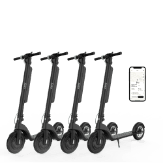
Rental process:
1. Download operator's app for your city
2. Create account and verify driving license (photo upload)
3. Add payment method
4. Find nearby scooter on map
5. Scan QR code to unlock (£1 unlock fee typical)
6. Ride in permitted areas (geofenced - scooter won't work outside designated zones)
7. Park in designated bay and end ride (typically £0.15-0.25 per minute)
Typical costs:
• Unlock fee: £1
• Per-minute rate: £0.15-0.25
• 20-minute ride (2 miles): £4-6
• Daily pass (where available): £12-18 for unlimited 30-minute rides
• Monthly subscription: £20-35 for reduced per-minute rates
Trial scooter restrictions:
• Maximum speed: 15.5 mph (25 km/h) - speed limited by software
• Geofencing: Cannot be ridden outside designated trial zones
• Slow zones: Automatically reduce speed to 8 mph in pedestrian-heavy areas
• No-go zones: Scooters automatically shut down in prohibited areas
• Parking requirements: Must be parked in designated bays (fines for improper parking)
Government Actions Toward Legalization (2025)
Recent political developments suggest movement toward eventual legalization, but timelines remain uncertain.
July 2025: Government Bill Introduction
Transport Secretary Heidi Alexander (took office late 2024) introduced a Government Bill in July 2025 aimed at:
• Tackling dangerous riding: New enforcement powers for police
• Setting regulatory groundwork: Framework for future PLEV legislation
• Addressing safety risks: Acknowledged risks of unregulated private e-scooter use
• Not full legalization: This bill addresses enforcement, not legalization of private scooters
Significance: First substantial government action on e-scooters since trials began, signaling serious engagement with the issue. However, this is NOT legalization legislation.
National Evaluation Study (2024-2026)
Second national evaluation of rental trials currently underway:
• Duration: 2024-2026
• Purpose: Assess safety, usage patterns, environmental impact, integration with public transport
• Conducting body: Department for Transport (DfT)
• Expected completion: 2026
• Influence: Results will heavily inform whether and how to legalize private e-scooters
Areas under evaluation:
• Accident and injury rates
• User demographics and trip purposes
• Impact on public transport usage
• Environmental benefits (car trip replacement rates)
• Infrastructure requirements
• Enforcement challenges
• Economic viability of rental schemes
Parliamentary Slot Challenges
The Department for Transport has informed local authorities that while legislation is under consideration, they've been unable to secure a parliamentary slot for proposed changes.
Why parliamentary time matters:
• UK Parliament has limited legislative time
• Government prioritizes bills by perceived urgency and political importance
• E-scooter legalization competes with other transport, safety, and infrastructure bills
• Cross-party support not guaranteed (concerns about safety, enforcement costs)
Practical impact: Even if government writes comprehensive PLEV legislation, it may wait months or years for parliamentary time to debate and pass it.
When Will Private E-Scooters Actually Be Legal?
No official government timeline exists, but analyzing available evidence provides realistic estimates.
Most Likely Timeline
Late 2025 - Early 2026:
• National evaluation concludes (2026)
• Government reviews findings
• Draft legislation prepared
2026-2027:
• Legislation introduced to Parliament (if parliamentary time secured)
• Consultation period (3-6 months typical for transport legislation)
• Parliamentary debate and amendments
• Passage through Commons and Lords (6-12 months)
2027-2028:
• Legislation receives Royal Assent
• Implementation period (6-12 months for regulations, registration systems, insurance frameworks)
• Earliest realistic legalization: Late 2027
• More likely: 2028
Optimistic scenario: Fast-tracked legislation could achieve legalization by late 2026
Realistic scenario: 2027-2028 implementation
Pessimistic scenario: Delays push legalization to 2029 or beyond, or government decides not to legalize at all
Factors That Could Delay Legalization
• Negative evaluation results: High injury rates or minimal car trip replacement could stall legislation
• High-profile accidents: Serious injuries or fatalities could create political backlash
• Parliamentary priorities: Other legislation takes precedence
• Political change: General elections or cabinet reshuffles could reset timelines
• Local authority opposition: Councils expressing concerns about enforcement costs and pavement clutter
• Insurance industry hesitation: If insurers refuse to offer affordable coverage, legalization becomes impractical
Factors That Could Accelerate Legalization
• Overwhelmingly positive trial results: Proven safety record and environmental benefits
• Public pressure: Strong voter demand (estimated 1+ million private scooters already owned illegally)
• International precedent: Ireland legalized in 2024; UK standing alongside only Netherlands in prohibition looks increasingly outdated
• Economic arguments: Micromobility industry pressure, job creation potential
• Post-pandemic transport policy: Continued emphasis on reducing public transport crowding and car dependency
What Will Legalization Look Like?
When private e-scooters are legalized, they won't be a free-for-all. Expect comprehensive regulations similar to rental trials.
Predicted Requirements for Private E-Scooters
Based on trial schemes and government consultations:
Age restrictions:
• Minimum age: 16 or 18 (likely 16 to match moped regulations)
• Driving license required (any category, including provisional)
Vehicle specifications:
• Maximum speed: 15.5 mph (25 km/h) - software limited
• Maximum motor power: 500W (0.5 kW)
• Weight limit: 55 kg maximum
• Lights required: Front white light, rear red light
• Bell or horn: Audible warning device
• Braking system: Front and rear brakes meeting British Standards
Insurance:
• Third-party liability insurance mandatory (£100-200 annual cost expected)
• Insurance industry developing specialized e-scooter products
• Bundled with home insurance or offered standalone
Registration:
• Possible registration system (DVLA or new digital registry)
• Vehicle identification number (VIN) or plate requirement (debated)
• Annual registration fee: £20-50 estimated
Where you can ride (predicted):
• Cycle lanes and cycle tracks
• Roads with speed limits ≤30 mph (possibly ≤40 mph)
• Some shared-use paths
• Prohibited: Pavements/footpaths (maintaining current rental trial rules)
• Prohibited: Motorways and A-roads
Helmet requirements:
• Likely recommended but not mandatory (following bicycle precedent)
• Possible mandatory for under-18s
Parking:
• Must not obstruct pavements or pedestrian access
• Local authorities may designate parking areas
• Fines for improper parking: £50-100
Expected Costs of Legal Private E-Scooter Ownership
When legalization occurs:
Initial costs:
• Compliant e-scooter: £300-1,000 (budget to mid-range)
• Helmet (if worn): £30-80
• Lights (if not built-in): £20-50
Annual operating costs:
• Insurance: £100-200
• Registration (if required): £20-50
• Electricity for charging: £5-15
• Maintenance (tires, brakes): £30-100
• Total: £155-365 per year
Compared to rental costs:
• If you currently rent 3x per week: £600-900 per year in rental fees
• Ownership breaks even after: 6-12 months
UK in International Context
The UK is increasingly isolated in its prohibition of private e-scooters.
UK and Netherlands: Lone Holdouts
After Ireland legalized private e-scooters in 2024, the UK and Netherlands are the only two countries in Europe where private e-scooter use on public roads remains illegal.
Countries where private e-scooters are legal:
• France (legalized 2019)
• Germany (legalized 2019)
• Spain (legalized 2021)
• Italy (legalized 2020)
• Portugal (legalized 2021)
• Ireland (legalized 2024)
• Belgium, Denmark, Sweden, Norway, Finland, Austria, Switzerland, Poland, Czech Republic (all legal with varying restrictions)
Ireland's 2024 Legalization: Lessons for UK
Ireland's approach (effective May 2024):
• Minimum age: 16
• Maximum speed: 25 km/h (15.5 mph)
• Maximum power: 500W
• Helmets recommended, not mandatory
• Insurance not required for private ownership
• Can be ridden in cycle lanes and on roads ≤50 km/h
• Prohibited on footpaths/pavements
Early results (first 6 months):
• No spike in serious injuries
• Estimated 50,000+ private scooters now in legal use
• Positive integration with cycling infrastructure
• Some local authorities implementing parking restrictions
Relevance to UK: Ireland's successful rollout provides evidence that legalization doesn't necessarily lead to chaos, potentially influencing UK policymakers.
What Should UK E-Scooter Owners Do Now?
If you own or are considering buying a private e-scooter:
Current Private E-Scooter Owners
Your options:
1. Wait for legalization (risky):
• Keep scooter but don't ride in public
• Risk of police seizure and fines if you do ride
• Scooter technology may be outdated by time legalization arrives (2027-2028)
2. Use on private land only (legal):
• Industrial estates, private driveways, large gardens
• Some landowners allow e-scooter use (confirm permission in writing)
• Limited practicality for most urban residents
3. Sell and use rental schemes (practical):
• Sell scooter while it still has value
• Use rental schemes in trial cities for legal riding
• Avoid fines, points, and seizure risks
• Re-purchase when legalization occurs
4. Keep for future legalization (if you can wait):
• Store scooter safely
• Ensure it will meet predicted regulations (check specifications)
• Be prepared to retrofit lights, brakes if needed
Prospective Buyers
Considering buying a private e-scooter?
Recommendation: Wait for legalization unless:
• You have private land where you can legally use it
• You're willing to accept the risk of fines and seizure (not recommended)
• You're buying in anticipation of 2027-2028 legalization and can wait
If you decide to buy before legalization:
• Choose a model likely to meet future regulations:
- 15.5 mph top speed
- 500W motor or less
- Quality brakes and lights
- Weight under 55 kg
• Budget-friendly options: £300-600 will likely be compliant
• Avoid high-performance scooters (20+ mph, 1000W+) as they won't be legal even after legalization
Staying Informed
Monitor these sources for legalization updates:
• GOV.UK: Official government announcements (search "e-scooter trials")
• Department for Transport: Policy updates and consultations
• Parliament.UK: Track legislation progress through Hansard and bill trackers
• Local authority websites: Your council may announce new trial schemes
• Advocacy groups: Organizations like PACTS (Parliamentary Advisory Council for Transport Safety) publish analysis
Conclusion: Patience Required for UK E-Scooter Legalization
Private electric scooters remain illegal in the UK in 2025, with no confirmed legalization date despite 8 years of rental trials (2020-2028). While Transport Secretary Heidi Alexander introduced enforcement-focused legislation in July 2025, comprehensive legalization is unlikely before late 2026 at the earliest, with 2027-2028 being more realistic timelines based on trial evaluation schedules, parliamentary processes, and the need to establish insurance and registration frameworks.
Key takeaways for UK residents:
• Private e-scooters illegal on all public roads, pavements, cycle lanes (legal only on private land)
• Penalties: £300-1,000 fines, 6 penalty points, vehicle seizure
• Rental trials legal in fewer than 30 cities (Lime, Voi, Tier, etc.) - extended to May 2028
• New trial locations accepting applications July-October 2025 and early 2026
• Realistic legalization timeline: 2027-2028 (optimistic: late 2026, pessimistic: 2029+)
• UK isolated internationally - only UK and Netherlands ban private e-scooters in Europe
• Ireland's successful 2024 legalization provides positive precedent
• When legalized: expect insurance (£100-200/year), registration, 15.5 mph limit, driving license required
For now, UK residents wanting to legally experience e-scooters should use rental schemes in trial cities or wait patiently for legalization legislation. Those who already own private scooters face a choice: store them for future legalization, use them only on private land, risk illegal use with significant penalties, or sell and transition to legal rentals. While the wait is frustrating given international precedents, the extensive trial program and government engagement in 2025 suggest legalization is a matter of "when," not "if"—likely arriving sometime between 2026 and 2028.