





Why Are Electric Bikes Legal but Not Scooters?
Explore why electric bikes are legal but not scooters, considering regulations, safety, and infrastructure challenges. Understand the legal discrepancies here.
Electric bikes, commonly known as e-bikes, have become increasingly popular as a sustainable and efficient mode of transportation. However, a common question arises: why are electric bikes legal in many areas while electric scooters often face legal restrictions or outright bans? The answer lies in a complex interplay of regulation, safety data, and infrastructure development that has evolved differently for these two forms of micromobility.
Understanding Legal Status
The legal status of electric bikes versus electric scooters primarily stems from differences in regulation, safety concerns, and infrastructure. As of current reporting, e-scooters are street-legal in 38 of the 50 U.S. states, while e-bikes enjoy even broader acceptance due to their well-established regulatory framework.
Regulation Differences
Electric bikes generally fall under a classification that aligns them with traditional bicycles. Most jurisdictions have well-established regulations for bicycles, and e-bikes are often seen as a natural extension of these laws. The federal laws in the United States categorize e-bikes based on a three-class system:
- Class 1: Pedal-assist only, maximum speed of 20 mph
- Class 2: Throttle-assisted, limited to 20 mph
- Class 3: Pedal-assist up to 28 mph
Under federal law, low-speed electric bicycles have motors not exceeding 750 watts and a maximum speed of 20 mph when motor-powered only. This framework allows local governments to regulate them more consistently across different jurisdictions.
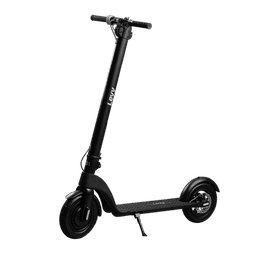
In contrast, electric scooters are a relatively new technology without a standardized regulatory framework, leading to varied legal treatments globally and even within countries. At the federal level, electric scooters shouldn't exceed a maximum speed of 20 mph and are allowed on roads if they have an electric motor of 750 watts or lower. Generally, operators can ride electric scooters legally as long as they operate at speeds under 15 mph and meet federal safety standards, with operators typically required to be at least 16 years old.
However, the legal landscape remains a colorful mosaic of different regulations for each state and city, with various local and state laws evolving to accommodate the growing popularity of electric scooters. For example:
- Delaware and Pennsylvania prohibit e-scooters on public streets and sidewalks, making them effectively illegal for road use
- California allows e-scooters on streets but requires riders to stay under 15 mph, have a valid driver's license or learner's permit, and wear helmets if under 18
- New York City may soon require e-scooters and e-bikes to be registered with the NYC Department of Transportation and have license plates under a proposed law called Priscilla's Law
Recent Regulatory Developments
The regulatory landscape continues to evolve rapidly. For e-bikes, several significant developments are underway:
- Starting July 1, 2025: E-bike operators without a driver's license may be required to carry a skills waiver and valid state ID while riding in certain jurisdictions
- Federal E-BIKE Act (H.R.1685): Proposed legislation that could introduce a tax credit allowing individuals to claim up to 30% of an e-bike's cost, capped at $5,000
- California AB 1774: Would make it illegal to tamper with e-bikes to exceed 28 mph
- California SB 1271: Would require all e-bikes sold in California to meet minimum safety standards and be certified by an accredited testing laboratory
Regarding helmet requirements, 25 states have no helmet requirements for e-bikes, while states following the tiered classification typically require helmets at minimum for Class 3 e-bikes.
Safety and Usage Concerns
Electric bikes typically have larger wheels and more robust frames compared to electric scooters, which can influence safety perceptions. Their design is often closer to that of a bicycle, intended for road use, while electric scooters are sometimes viewed as less stable or safe for street use, leading to more cautious regulation and even bans in some regions.
However, current safety data presents a more nuanced picture. A comprehensive 2024 JAMA Network Open study analyzed emergency room care between 2017 and 2022, finding that roughly 3 million people sought ER care during this period for micromobility injuries, including approximately 45,500 e-bike riders and 190,000 e-scooter riders.
A recent Rutgers study examining data from approximately 100 sampled hospitals in 2021 and 2022 found:
- 11,911 bicycle injuries
- 1,166 e-scooter injuries
- 655 e-bike injuries
Interestingly, injured e-scooter users were not more likely to suffer severe injuries than bicyclists and e-bike users, with around 15% of injured micromobility users presenting to an emergency department being admitted to the hospital.
A UK study revealed surprisingly different results when measuring collisions per distance traveled. Electric scooters have an incident rate of 0.66 collisions for every million miles travelled—five times lower than bikes, which have 3.33 collisions per million miles travelled.
One notable difference: e-bike injuries were more likely to involve a motor vehicle (33%) compared to bicycle injuries (26%) and e-scooter injuries (23%). Additionally, injured e-scooter users tend to be more diverse (including a higher proportion of women and minorities) and younger than bicyclists and e-bike users.
Infrastructure Readiness
Bicycles, including e-bikes, benefit from a long history of infrastructure development, such as bike lanes and bike-friendly city planning. Federal regulations even authorize local land managers to designate non-motorized areas open to e-bikes or specific e-bike classes.
In contrast, there is no infrastructure designed exclusively for e-scooter riders. Research from Austin, Texas, shows that an average e-scooter trip distance is split between:
- Roadways: 33%
- Sidewalks: 18%
- Bike lanes: 11%
- Other unclassified areas: 38%
This lack of dedicated infrastructure makes municipalities hesitant to legalize e-scooters without proper pathways and safety measures in place. The rules about where e-scooters can be ridden vary significantly by state:
- Eleven states prohibit e-scooters on sidewalks and require riders to use roads or bike lanes, typically staying to the far right
- Delaware and Pennsylvania don't allow e-scooters on roads at all, and consequently riders cannot use on-road bike lanes either
- New York City requires e-scooters to use bike lanes wherever possible, prohibits them on roads with speed limits over 30 mph, and bans them from sidewalks
Traditional electric scooters are often restricted from sidewalks but allowed in bike lanes as a safety measure to prevent collisions with pedestrians.
Conclusion
While both electric bikes and scooters are modern solutions to urban commuting, their legal discrepancies can be attributed to historical context, evolving safety assessments, and regulatory frameworks that developed at different paces. Electric bikes benefited from being classified alongside traditional bicycles, giving them access to decades of established cycling infrastructure and regulation.
Electric scooters, as a newer technology, are still finding their place in the legal and infrastructure landscape. Despite some safety data suggesting e-scooters may be safer per mile traveled than bicycles, regulations remain more restrictive in many areas due to concerns about infrastructure compatibility, pedestrian safety, and the lack of standardized rules.
As cities continue to innovate and adapt to new mobility trends—with 38 states now allowing e-scooters on streets and ongoing legislative efforts to standardize rules—the legal status of electric scooters will likely continue to evolve. The introduction of new safety requirements, registration systems, and infrastructure improvements suggests that e-scooter regulations may gradually align more closely with those of electric bikes, though local variations will likely persist based on each community's specific needs and infrastructure capabilities.