





Is It Cheaper to Buy or Rent an Electric Scooter? Complete Cost Comparison
Full cost breakdown comparing buying vs renting electric scooters. Break-even analysis, monthly costs, and hidden fees for Lime, Bird, and personal scooter ownership.
If you ride electric scooters regularly, you have probably asked yourself: is it cheaper to buy or rent an electric scooter? The answer depends on how often you ride, where you live, and how much you are willing to spend upfront. But the math almost always favors buying -- and it is not even close.
A daily commuter spending $6 to $8 per rental ride will rack up $3,000 to $4,200 per year in ride-share costs. Meanwhile, a quality personal electric scooter costs $300 to $800 upfront and roughly $150 to $300 per year to maintain. That means buying a scooter can pay for itself in as little as two to three months of regular use. Even occasional riders who hop on a rental just twice a week will hit break-even within eight to ten months of owning a budget scooter.
This guide breaks down the real numbers behind renting versus buying. We will walk through current rental pricing from companies like Lime and Bird, the true cost of owning a personal electric scooter at every price tier, detailed break-even calculations for different rider profiles, and the hidden costs that most comparisons leave out. Whether you are a daily commuter, a weekend rider, or someone considering an electric scooter for the first time, this article will give you the data you need to make the right financial decision.
Table of Contents
- How Much Does Renting an Electric Scooter Cost?
- How Have Rental Scooter Prices Changed Over Time?
- What Do Rental Subscription Plans Actually Save You?
- How Much Does It Cost to Buy an Electric Scooter?
- What Are the Annual Costs of Owning an Electric Scooter?
- Buy vs. Rent: Break-Even Analysis
- One-Year Total Cost Comparison
- Cost Per Mile: How Do Scooters Compare to Other Transportation?
- What Are the Hidden Costs of Renting an Electric Scooter?
- What Are the Hidden Costs of Owning an Electric Scooter?
- Advantages of Buying an Electric Scooter
- Advantages of Renting an Electric Scooter
- When Does Renting Still Make Sense?
- Should You Buy or Rent an Electric Scooter?
- Frequently Asked Questions
How Much Does Renting an Electric Scooter Cost?
Before you can compare renting to buying, you need to understand exactly what rental scooters cost per ride. Rideshare scooter companies like Lime, Bird, and Spin all use a similar pricing model: you pay an unlock fee just to start the ride, then a per-minute charge for the duration. The rates vary by company, city, and time of day.
Here is what the major rental scooter companies charge as of 2026:
| Company | Unlock Fee | Per-Minute Rate | 15-Min Ride Cost | 20-Min Ride Cost |
|---|---|---|---|---|
| Lime | $0.70 - $1.00 | $0.30 - $0.52 | $5.50 - $8.80 | $7.00 - $11.40 |
| Bird | $1.00 - $1.50 | $0.15 - $0.39 | $3.25 - $7.35 | $4.00 - $9.30 |
| Spin | $1.00 | $0.20 - $0.40 | $4.00 - $7.00 | $5.00 - $9.00 |
The range in pricing comes down to where you live. Rental scooter rates are set at the city level, and the difference between a low-cost and high-cost market is dramatic. For a deeper look at how Lime structures its pricing by city, we have a full breakdown available.
How Do Rental Rates Vary by City?
Lime, the largest scooter rental operator, prices rides differently based on the cost tier of the city:
- High-cost cities (New York City, Los Angeles, San Francisco, Orlando): $0.40 to $0.52 per minute. A 20-minute ride in Orlando costs $11.40.
- Mid-range cities (most medium-sized U.S. cities): $0.30 to $0.40 per minute. A 20-minute ride costs roughly $7.00 to $9.00.
- Low-cost cities (smaller cities and college towns): $0.15 to $0.30 per minute.
For daily commuters making two rides per day across 22 workdays per month, the costs add up fast:
| Scenario | Per-Ride Cost | Monthly Cost | Annual Cost |
|---|---|---|---|
| Low-cost city, 15-min rides | ~$4.50 | ~$198 | ~$2,376 |
| Mid-range city, 15-min rides | ~$6.25 | ~$275 | ~$3,300 |
| High-cost city, 15-min rides | ~$8.00 | ~$352 | ~$4,224 |
| Mid-range city, 20-min rides | ~$8.00 | ~$352 | ~$4,224 |
That is $2,376 to $4,224 per year just to get to and from work on a rental scooter. For a comprehensive look at these costs, check out our complete Lime scooter rental cost breakdown.
How Have Rental Scooter Prices Changed Over Time?
One factor that many riders overlook is how aggressively rental scooter prices have increased since the industry launched. What started as a cheap alternative to rideshare has become significantly more expensive:
- 2017-2018 (launch era): $1.00 unlock fee plus $0.15 per minute. A 20-minute ride cost just $4.00.
- 2019-2020: Per-minute rates rose to $0.25 to $0.30 -- a 66% increase over launch pricing.
- 2024-2026: Per-minute rates now sit at $0.30 to $0.52 in most markets. That same 20-minute ride that cost $4.00 in 2018 now costs $7.00 to $11.40.
Per-minute rates have more than doubled in seven years. And there is no indication that this trend will reverse. Lime reported $810 million in gross bookings across 200 million rides in 2024, with an average gross revenue of $4.05 per ride. The companies have found that riders will pay higher prices, so rates continue to climb.
When you buy your own scooter, your cost is locked in on day one. You are not subject to annual price increases, surge pricing, or market-by-market rate adjustments.
What Do Rental Subscription Plans Actually Save You?
Rental companies have introduced subscription plans aimed at frequent riders. These reduce the per-ride cost compared to pay-as-you-go pricing, but the savings are more modest than you might expect.
Lime Prime Subscription
Lime Prime costs $6 per month and restructures ride pricing:
- Rides up to 5 minutes: flat $1.50
- Rides up to 20 minutes: flat $2.85
- Rides over 20 minutes: $0.28 per minute after the 20-minute mark
- No unlock fees and extended 30-minute reservations
For a daily commuter making two 15-minute rides per day, Lime Prime brings the daily cost down to about $5.70, or roughly $125 per month. That is a meaningful reduction from the $275 per month you would pay at mid-range pay-per-ride rates -- but it is still $1,506 per year.
Bird Subscription Plans
Bird offers monthly plans at $10 to $25 per month with reduced per-minute rates as low as $0.10, and annual plans at $100 to $300 per year that can bring per-minute charges down to $0.05.
Personal Scooter Subscriptions
Companies like Unagi offer a middle ground: a personal scooter delivered to your door on a monthly subscription. The Unagi Model One Classic runs $39 to $59 per month plus a $50 sign-up fee and $5 per month for theft insurance. That includes maintenance, repairs, and theft coverage. However, at $59 per month, you reach the $990 purchase price in about 24 months. After that, you are paying for a scooter you could have owned outright.
The bottom line on subscriptions: they narrow the gap between renting and buying, but they do not close it. Even at the best subscription rates, you are still spending significantly more per year than you would by owning a scooter.
How Much Does It Cost to Buy an Electric Scooter?
Electric scooters are available at every price point, and the category you choose should match your commute distance, terrain, and how long you plan to ride. Here is what is available in each tier.
Budget Electric Scooters ($200 to $500)
| Model | Price | Top Speed | Range | Key Features |
|---|---|---|---|---|
| Gotrax GXL V2 | ~$250 | 15.5 mph | 12 mi | 250W motor, foldable, entry-level |
| Segway Ninebot E2 | ~$300 | 15.5 mph | 15.5 mi | Foldable, reliable brand |
| Hiboy S2 | ~$350 | 19 mph | 17 mi | 350W motor, solid tires, dual braking |
| NIU KQi 100P | ~$370 | 15.5 mph | 15 mi | Comfortable ride, trusted brand |
| Gotrax G4 | ~$400 | 20 mph | 25 mi | Excellent range for the price |
Budget scooters in this range typically feature 250 to 350W motors, 12 to 25 miles of range, and top speeds of 15 to 20 mph. They are solid choices for flat urban commutes under five miles. For more options in this price range, see our guide to the best electric scooters under $500.
Mid-Range Electric Scooters ($500 to $1,000)
| Model | Price | Top Speed | Range | Key Features |
|---|---|---|---|---|
| NIU KQi3 Max | ~$700 | 20 mph | 31 mi | Best all-around, great braking |
| NIU KQi 300X | ~$750 | 23.6 mph | 27 mi | Balance of speed and range |
| Segway Ninebot MAX G2 | ~$800 | 22 mph | 34 mi | Massive range, hill climbing |
| Segway Ninebot MAX G3 | ~$900 | 22 mph | 40 mi | Best hill climbing at this price |
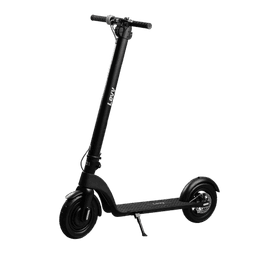
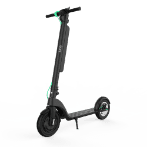
Mid-range scooters come with 500 to 900W motors, 25 to 40 miles of range, speeds of 20 to 24 mph, better suspension, pneumatic tires, and app connectivity. They are suitable for longer commutes and moderate hills. Browse the Levy Electric scooter lineup for models in this range that are designed specifically for daily commuters.
Premium Electric Scooters ($1,000 to $2,000)
| Model | Price | Top Speed | Range | Key Features |
|---|---|---|---|---|
| Apollo Go 2024 | ~$1,200 | 28 mph | 40 mi | Dual motor, 1500W peak, premium build |
| Vsett 10+ | ~$1,600 | 40 mph | 50+ mi | Dual suspension, rapid acceleration |
| Apollo Pro 2024 | ~$1,800 | 40+ mph | 50+ mi | Dual 1200W motors, self-healing tires |
Premium scooters deliver dual motors with 2,400 to 6,000W peak power, 40 to 60 miles of range, speeds of 28 to 40+ mph, full suspension, hydraulic brakes, and UL-certified batteries. These are for serious commuters and enthusiasts who want the best ride quality and range available. For a curated list of top picks, read our best electric scooters for commuting guide.
What Are the Annual Costs of Owning an Electric Scooter?
The purchase price is only part of the ownership equation. You also need to account for electricity, maintenance, accessories, and optional insurance. Here is what those costs look like in practice:
| Cost Category | Low Estimate | High Estimate | Notes |
|---|---|---|---|
| Electricity (charging) | $15 | $60 | $0.04 - $0.07 per charge with daily charging |
| Tire replacement | $0 | $100 | Pneumatic tires: $20 - $50 per tire plus $10 - $30 labor |
| Brake pads | $0 | $40 | $20 - $40 every 6 - 12 months |
| General maintenance | $30 | $200 | Bolt tightening, lubrication, minor repairs |
| Insurance (optional) | $0 | $400 | Liability-only ~$100/yr; comprehensive ~$200 - $400/yr |
| Lock and security | $20 | $80 | One-time cost: U-lock $30 - $60, GPS tracker ~$50 |
| Battery replacement | $0 | $0 | Typically not needed until year 3 - 5 ($100 - $500 when needed) |
| Total Year 1 (typical) | $150 | $300 | Realistic midpoint for an average rider |
Charging an electric scooter costs almost nothing. At average U.S. electricity rates, a full charge runs about $0.04 to $0.07. Even if you charge every single day, your annual electricity cost stays under $60. Maintenance is similarly affordable. The biggest recurring expense is tire replacement, which runs $20 to $50 per tire if you have pneumatic tires, and you will typically need new tires every 1,000 to 3,000 miles. If you need help with repairs, our electric scooter repair shop directory can point you to a qualified technician near you.
For a typical rider putting in 10 to 15 miles per day on a mid-range scooter, expect to spend about $150 to $300 per year on all maintenance and operating costs combined. That is less than a single month of rental scooter commuting in most cities.
Buy vs. Rent: Break-Even Analysis
This is where the math gets decisive. We calculated break-even points for three rider profiles using mid-range city rental rates ($6.25 per 15-minute ride) and realistic ownership costs.
Scenario 1: Occasional Rider (2 Rides Per Week)
| Renting (Pay-Per-Ride) | Owning ($400 Scooter) | |
|---|---|---|
| Monthly cost | $54 (8.6 rides x $6.25) | $8 (amortized ownership costs) |
| Year 1 total | $650 | $550 (purchase + maintenance) |
| Year 2 total | $1,300 | $700 |
| Break-even point | -- | ~8 - 9 months |
Even someone who only rides twice a week breaks even on a $400 scooter purchase within nine months. By the end of year two, they have saved $600 compared to renting.
Scenario 2: Regular Commuter (10 Rides Per Week)
This is the most common profile: someone riding to and from work five days a week, two rides per day.
| Renting (No Sub) | Renting (Lime Prime) | Owning ($600 Scooter) | |
|---|---|---|---|
| Monthly cost | $275 | ~$125 | $15 |
| Year 1 total | $3,300 | $1,506 | $800 (purchase + $200 maintenance) |
| Year 2 total | $6,600 | $3,012 | $1,000 |
| Break-even point | -- | -- | ~2 - 3 months vs. no sub; ~5 - 6 months vs. Lime Prime |
A daily commuter who buys a $600 mid-range scooter saves $2,500 in the first year compared to renting without a subscription. Even compared to Lime Prime, they save $706 in year one and $2,012 over two years. The scooter pays for itself in two to three months against standard rental pricing.
Scenario 3: Heavy User (4 Rides Per Day)
Some riders make multiple trips per day -- commuting, running errands, and getting around on weekends.
| Renting (No Sub) | Owning ($800 Scooter) | |
|---|---|---|
| Monthly cost | $550 | $20 |
| Year 1 total | $6,600 | $1,100 (purchase + $300 maintenance) |
| Year 2 total | $13,200 | $1,400 |
| Break-even point | -- | ~6 - 7 weeks |
Heavy users hit break-even in about six weeks. After two years, they have saved $11,800 compared to renting. At that level of savings, you could buy a premium $1,200 scooter and still come out more than $10,000 ahead.
The Key Break-Even Numbers
Here is a quick reference for how fast different scooter purchases pay for themselves:
- Budget scooter ($300), daily commuter: Break-even in 5 to 7 weeks
- Mid-range scooter ($450), daily commuter: Break-even in less than 2 months
- Mid-range scooter ($600), daily commuter: Break-even in 2 to 3 months
- Premium scooter ($1,200), daily commuter: Break-even in 4 to 5 months
- Any scooter, occasional rider (2x/week): Break-even in 8 to 10 months
No matter how you slice it, the math favors buying for anyone who rides more than once or twice a week.
One-Year Total Cost Comparison
To put everything in perspective, here is a side-by-side comparison of every major option available to a daily commuter in a mid-range city making two 15-minute rides per day, 22 days per month:
| Option | Year 1 Cost | Year 2 Cost | 2-Year Total |
|---|---|---|---|
| Lime (no subscription) | $3,300 | $3,300 | $6,600 |
| Lime Prime subscription | $1,506 | $1,506 | $3,012 |
| Bird (with annual plan) | ~$2,400 | ~$2,400 | ~$4,800 |
| Unagi subscription ($59/mo) | $758 | $708 | $1,466 |
| Own: Budget scooter ($350) | $550 | $200 | $750 |
| Own: Mid-range scooter ($700) | $900 | $200 | $1,100 |
| Own: Premium scooter ($1,200) | $1,400 | $250 | $1,650 |
The two-year numbers tell the whole story. Renting a Lime scooter without a subscription costs $6,600 over two years. Owning a budget scooter costs $750 for the same period. That is a savings of $5,850. Even a premium $1,200 scooter saves you $4,950 compared to standard Lime rental pricing over two years.
The Unagi subscription is the closest competitor to ownership in terms of cost, but it still runs $716 more than buying a comparable mid-range scooter over two years -- and at the end of those two years, you own nothing.
Cost Per Mile: How Do Scooters Compare to Other Transportation?
One of the most revealing ways to compare transportation options is cost per mile. This metric strips away differences in trip length and frequency and gives you a pure efficiency comparison:
| Transportation Option | Cost Per Mile |
|---|---|
| Personal electric scooter (ownership) | $0.05 - $0.09 |
| Public transit | $0.50 - $1.00 |
| Car ownership | $0.50 - $0.70 |
| Rental scooter (with subscription) | $0.60 - $0.80 |
| Rental scooter (pay-per-ride) | ~$1.50 |
| Uber/Lyft | $2.00 - $3.00 |
Owning an electric scooter is, mile for mile, the cheapest way to get around in a city. At $0.05 to $0.09 per mile, it is roughly 17 to 30 times cheaper than renting one. It is even cheaper per mile than public transit in most cities. The average rental scooter ride covers about 2.1 miles in 12 to 15 minutes, according to NACTO data. At pay-per-ride rental rates, that 2.1-mile trip costs about $3.15 to $6.25. On your own scooter, the same trip costs about $0.10 to $0.19.
What Are the Hidden Costs of Renting an Electric Scooter?
The per-minute rate is only the starting point. Several additional costs eat into your wallet when you rent regularly:
| Hidden Cost | Impact | Details |
|---|---|---|
| Surge pricing | +25% to 100% per ride | Peak hours, weekends, events; not always disclosed upfront |
| Dead scooter walks | 5 - 15 min wasted per ride | Walking to find a charged scooter; your time has value |
| Out-of-zone fees | $5 - $25 penalty | Riding or parking outside the designated service area |
| Parking violation fines | $15 - $50+ | Improperly parked scooters; some cities pass fines to the rider |
| Low battery fees | $1 - $3 extra | Some companies charge if you end a ride with a nearly depleted battery |
| Price inflation trend | Ongoing | Rates have doubled since 2018; expect continued increases |
| Tip prompts | $1 - $3 per ride | Apps increasingly prompt for tips after each ride |
Surge pricing alone can add 25% to 100% to the cost of a ride during rush hours and high-demand periods. If you rely on rental scooters for your daily commute, you are almost certainly paying surge prices during at least one of your daily rides. The time cost is real too. Spending five to fifteen minutes finding an available, charged scooter adds up to 30 to 75 minutes of wasted time per week for a daily commuter. That is two to five hours per month spent just looking for a scooter -- time you would never waste if you had your own parked and charged at home.
What Are the Hidden Costs of Owning an Electric Scooter?
Buying is not completely free of hidden costs either. Here are the ownership expenses that many buyers do not account for upfront:
| Hidden Cost | Impact | Details |
|---|---|---|
| Theft and replacement | $300 - $2,000 | Average replacement cost in cities: $1,200 |
| Security accessories | $30 - $110 one-time | U-lock ($30 - $60) plus GPS tracker ($50+) |
| Depreciation | 20% - 40% in year 1 | Budget brands depreciate faster; premium brands hold 70% - 80% |
| Battery degradation | Gradual range loss | Batteries lose 10% - 20% capacity per year; replacement $100 - $500 |
| Flat tires | $20 - $80 per occurrence | Pneumatic tires can puncture; tubeless sealant helps but does not eliminate |
| Water damage | $50 - $300 repair | Riding in rain can damage electronics, even on water-resistant models |
| Insurance | $100 - $400/yr | Not required but smart for expensive scooters |
| Accessories | $50 - $200 one-time | Helmet ($30 - $80), lights ($15 - $30), phone mount ($15 - $25) |
The biggest wild card in ownership is theft. In some metro areas, electric scooter theft rates exceed 15%. A good U-lock ($30 to $60) and GPS tracker ($50+) are smart investments that dramatically reduce your risk. If you own a scooter worth $800 or more, comprehensive insurance at $200 to $400 per year provides peace of mind.
Depreciation is the other factor worth understanding. Budget scooters from brands like Gotrax and Hiboy typically retain 50% to 60% of their value after one year and 30% to 40% after two years. Premium brands like Apollo, Dualtron, and VSETT hold value much better -- 70% to 80% after a year, and sometimes 80% to 85% if well-maintained. The key resale factor is battery health, since replacement batteries represent about 30% of a scooter's value.
Even accounting for all hidden costs, ownership is dramatically cheaper than renting for anyone who rides regularly. The worst-case ownership scenario (expensive scooter, unlucky with repairs, high insurance) still costs far less per year than the best-case rental scenario for a daily commuter.
Advantages of Buying an Electric Scooter
Beyond the cost savings, owning your own scooter comes with significant quality-of-life benefits:
- Always available: No hunting for a scooter. No dead batteries. No "no scooters available in your area" messages. Your scooter is charged and waiting at your door every morning.
- Better scooter quality: Personal scooters are almost always higher quality than rental fleet models. Fleet scooters take enormous abuse from hundreds of riders and are built to be cheap and replaceable. A $400 personal scooter will outperform most $2,000+ fleet scooters in ride quality.
- No surge pricing: Your cost per ride stays the same whether it is rush hour, a holiday weekend, or during a major event. Rental rates can spike 25% to 100% during peak periods.
- Customization: Choose a model that matches your exact commute. Add accessories like a phone mount, basket, or upgraded lights. Swap in better tires. The scooter works for your life, not the other way around.
- Consistent experience: You learn your scooter's behavior -- how it brakes, its real-world range, its quirks. This makes you a safer, more confident rider. Jumping on a different rental scooter every day means constantly adapting to unfamiliar handling.
- Privacy: No GPS tracking or ride data collection. Rental companies log every trip you take, where you go, how fast you ride, and when you ride. Your own scooter does not report your movements to anyone.
- Speed advantage: Most rental scooters are software-limited to 15 mph. Personal scooters in the $400+ range typically reach 19 to 22 mph, and premium models hit 28 to 40+ mph. Faster speeds mean shorter commutes.
Make sure to check electric scooter laws in your state before purchasing, as regulations around speed limits, helmet requirements, and where you can ride vary significantly.
Advantages of Renting an Electric Scooter
Renting does have legitimate advantages in certain situations:
- Zero upfront cost: You pay only when you ride. There is no $300 to $2,000 outlay on day one.
- No maintenance responsibility: Flat tire? Brake issue? Battery dying? Not your problem. The rental company handles all maintenance, charging, and repairs.
- No storage needed: You do not need space in your apartment, a secure parking spot at work, or a way to carry the scooter up stairs. You pick one up and leave it when you are done.
- No theft worry: If a rental scooter gets stolen while you are in a store, it is the company's loss. If your personal scooter gets stolen, you are out $300 to $2,000.
- Try before you buy: Renting is a good way to test whether scooter commuting fits your lifestyle before investing in a purchase. Spend a week or two renting and see if the route, distance, and experience work for you.
- Flexibility across cities: If you travel frequently, rental scooters are available in most major cities. Your personal scooter stays at home.
When Does Renting Still Make Sense?
Despite the overwhelming cost advantage of buying, there are specific situations where renting is the smarter choice:
- Fewer than 4 rides per month: If you only ride a handful of times per month, the break-even period on even a budget scooter stretches past two years. At that frequency, the convenience of renting outweighs the cost premium.
- Traveling or visiting a new city: Rental scooters are perfect for exploring a city you do not live in. No need to ship or carry your personal scooter on a trip.
- Testing the concept: Not sure if you will actually stick with scooter commuting? Rent for two to four weeks first. Track your rides, your routes, and how the experience feels before committing to a purchase.
- Short-term need: If you only need a scooter for a month or two (temporary work assignment, car in the shop), renting or a subscription like Unagi makes more sense than buying.
- High theft-risk area with no secure storage: If you have no way to securely store a scooter at home or at work, and you live in an area with high theft rates, the risk of losing a $500+ scooter may outweigh the savings.
Should You Buy or Rent an Electric Scooter?
Based on all the data, here is a straightforward decision framework:
Rent If:
- You ride fewer than 4 times per month
- You are testing whether scooter commuting works for you
- You need a scooter temporarily (less than 3 months)
- You travel frequently and want scooter access in multiple cities
Consider a Subscription If:
- You ride 4 to 8 times per month
- You want a personal scooter but are not ready for the upfront cost
- You value the included maintenance and theft protection
- Lime Prime or Bird annual plans can reduce your rental costs by 40% to 60%
Buy If:
- You ride 8 or more times per month (break-even within 2 to 6 months)
- You commute daily (buying is a financial no-brainer; saves $2,000 to $4,000 per year)
- You want a better ride quality than fleet scooters offer
- You value having a scooter available on demand without app hunting or availability gambles
For most people reading this article -- anyone who rides regularly or is considering an electric scooter for commuting -- buying is the clear winner. The savings start within weeks, compound every month, and add up to thousands of dollars per year.
What Should You Buy?
If you have decided to buy, here is a quick guide to choosing the right tier:
- Commute under 5 miles, flat terrain: A budget scooter ($250 to $400) will serve you well. Look for models with at least 12 miles of range and 15+ mph top speed.
- Commute 5 to 10 miles, some hills: Invest in a mid-range scooter ($500 to $900) for better range, more power, and pneumatic tires. The Levy Electric scooter lineup includes models designed specifically for this use case.
- Commute 10+ miles, steep hills, or mixed terrain: A premium scooter ($1,000 to $2,000) delivers the range, power, and suspension you need for demanding commutes.
No matter which tier you choose, buying a personal electric scooter is one of the highest-return investments you can make in your daily transportation. The break-even math is clear, the long-term savings are substantial, and the ride experience is simply better on a scooter that is yours.
Frequently Asked Questions
How Long Does It Take for an Electric Scooter to Pay for Itself?
For a daily commuter replacing rental rides, a budget scooter ($300 to $400) pays for itself in five to seven weeks. A mid-range scooter ($500 to $700) breaks even in two to three months. Even a premium $1,200 scooter pays for itself in four to five months. For occasional riders who ride twice a week, break-even takes about eight to ten months regardless of scooter price tier.
How Much Does It Cost to Charge an Electric Scooter?
Charging an electric scooter costs between $0.04 and $0.07 per full charge at average U.S. electricity rates. Even with daily charging, your annual electricity cost stays under $60. This is one of the biggest advantages of ownership -- the fuel cost is essentially negligible.
Is a Scooter Rental Subscription Worth It?
Subscriptions like Lime Prime reduce per-ride costs significantly -- from about $275 per month down to about $125 per month for a daily commuter. However, that is still $1,506 per year, compared to about $800 total for buying a $600 mid-range scooter (including first-year maintenance). Subscriptions make sense if you ride 4 to 8 times per month and are not ready to commit to a purchase, but they do not beat ownership for regular riders.
What Is the Cheapest Way to Commute by Electric Scooter?
Owning a personal electric scooter is the cheapest option at $0.05 to $0.09 per mile. That is cheaper than public transit ($0.50 to $1.00 per mile), car ownership ($0.50 to $0.70 per mile), rental scooters with subscriptions ($0.60 to $0.80 per mile), rental scooters at pay-per-ride rates (~$1.50 per mile), and rideshare services like Uber and Lyft ($2.00 to $3.00 per mile).
How Much Do Rental Scooter Riders Spend Per Year?
A daily commuter in a mid-range city making two 15-minute rides per day spends approximately $3,300 per year on rental scooters without a subscription. With Lime Prime, that drops to about $1,506 per year. In high-cost cities like New York, Los Angeles, or San Francisco, annual costs can reach $4,224 or more.
Do Electric Scooters Hold Their Value?
It depends on the brand. Budget scooters typically retain 50% to 60% of their value after one year and 30% to 40% after two years. Premium brands like Apollo, Dualtron, and VSETT hold their value much better, retaining 70% to 80% after one year. The key factor in resale value is battery health, since battery replacement represents roughly 30% of a scooter's total value. Well-maintained premium scooters with healthy batteries can retain 80% to 85% of their purchase price.
What Are the Biggest Risks of Owning an Electric Scooter?
Theft is the number one risk, with an average replacement cost of $1,200 in metro areas. Invest in a quality U-lock ($30 to $60) and consider a GPS tracker ($50+). The second risk is unexpected repair costs -- motor or controller issues can run $50 to $200 out of warranty. Comprehensive insurance ($200 to $400 per year) mitigates both of these risks and is worth considering for scooters priced above $800.
How Long Do Electric Scooters Last?
A well-maintained electric scooter lasts three to five years with regular use. Budget scooters tend toward the three-year end of that range, while premium scooters with better build quality and replaceable batteries can last five years or more. Battery degradation is the primary limiting factor -- batteries typically lose 10% to 20% of their capacity per year, and replacement batteries cost $100 to $500 depending on the model. Even at a three-year lifespan, a $400 budget scooter used for daily commuting saves $8,000 to $9,000 compared to rental scooters over that period.
Can You Ride an Electric Scooter in the Rain?
Most electric scooters carry an IP54 or IPX4 water resistance rating, which means they can handle light rain and splashes. However, riding in heavy rain or through standing water risks damaging the electronics, motor, or battery connections. Water damage repairs can cost $50 to $300. If you commute in a rainy climate, look for scooters with IP67 ratings or higher, and avoid submerging the deck in puddles. This is one area where rental scooters have an advantage -- if a rental scooter gets water damaged, it is not your problem.