Specifications below are taken from published product documentation. Where a vendor does not publish something, we say so rather than guess.
Wire the packs directly together
No combining hardware at all. A splitter cable joins both packs to the controller. This is how several production vehicles do it, including at least one e-bike manufacturer that documents braking energy being recovered into both packs at once.
Examples: Splitter cables; several production e-bikes and e-mopeds
- Cost
- Effectively free
- Regen
- Works — nothing blocks reverse current
- Pack matching
- Required, and strictly
- Hot-swap
- No — breaking a live connection arcs
Strengths
- Zero cost and zero added loss
- Regenerative braking works normally
- Nothing extra to fit, seal or fail
Where it costs you
- Packs must be matched in chemistry, series count and state of charge
- The rider has to maintain that matching, forever
- A depleted pack will be charged hard by a full one at the moment of connection
- Requires common-port pack BMS designs to be safe
Best for: Vehicles where both packs are permanently fitted, identical, and charged together — and where you control the whole system.
An aftermarket combiner module
A real and surprisingly capable category, sold through e-bike retailers and Chinese B2B marketplaces. These use a one-way switching element per pack, so the packs never see each other. Several publish full specifications and sell at OEM quantities.
Examples: Risun Motor parallel module; Electrify Bike dual battery module; Changzhou Mayebikes; Spark Cycle Works Battery Blender; Area 13; EUNORAU
- Voltage
- Commonly 20–72 V, some to 100 V
- Current
- 20 A to 200 A depending on model
- Cost
- Roughly $20–125
- MOQ
- As low as 2 pieces on B2B marketplaces
- Regen
- Generally blocked — several vendors say so explicitly
Strengths
- Cheap, available now, and genuinely functional
- Current ratings that exceed most light vehicles
- Mismatched packs stop being the rider’s problem
- Available at OEM quantities with tiered pricing
Where it costs you
- Regenerative braking generally does not work — several product pages warn about it in capitals
- Product-level safety certification is rarely published — check each vendor rather than assuming
- Typically no communication to the vehicle and no fault reporting
- Workmanship and environmental protection vary widely and are usually undocumented
- Support varies from good to non-existent; ask what happens when one fails in the field
Best for: Retrofits, prototypes, low volumes, and any vehicle with no regen where certification is not being pursued.
An integrated pack-and-BMS system
The strongest option on this page when certification support and a bundled pack programme are what you need most — and we would rather tell you that than pretend otherwise. Several LEV battery houses build multi-pack paralleling into the pack’s own management system, then sell the packs as a programme.
Examples: Tritek multi-battery solution, and similar offerings from LEV battery manufacturers
- Packs supported
- Up to 11 in parallel, in at least one case
- Hot-swap
- Yes, with automatic pack ID assignment
- Comms
- CAN bus, with display and telematics options
- Certification claimed
- Quality-system (ISO 9001, IATF 16949) plus product, transport and ingress standards (UL, UN, IEC, EN 50604, IP67) — ask for certificate scope and the exact covered assembly
- Cost
- Quoted per programme
Strengths
- Genuinely OEM-grade, with a certification posture most component vendors cannot match
- Pre-charge, hot-swap and automatic pack identification handled for you
- CAN diagnostics and fleet telemetry included
- One supplier owns packs, management and combining together
Where it costs you
- You buy their packs — the capability lives inside the pack, not between packs
- Cell choice, form factor and pack supplier are no longer yours
- Switching later means requalifying the whole battery system
- Regen support is not documented publicly
Best for: Manufacturers happy to source the whole battery system from one vendor, especially at volume and where certification support matters most.
A closed drive ecosystem
The major drive-system suppliers offer two-battery support as part of their platform. It is well engineered — but read the behaviour carefully, because at least one widely used implementation switches between packs rather than running them together.
Examples: Bosch DualBattery; Specialized SL Range Extender and similar
- Architecture
- Varies — switched in at least one major case
- Combined energy
- Roughly double a single pack
- Combined power
- Not increased where the system switches
- Availability
- Only with that supplier’s drive system
Strengths
- Fully integrated, supported and certified as part of the platform
- Display, diagnostics and charging all handled coherently
- Proven at very large volumes
Where it costs you
- You commit to the entire drive system to get it
- A switched implementation gives twice the energy but not twice the current
- No ability to use your own packs or your own controller
- Not available as a component at all
Best for: Manufacturers already committed to that drive platform, whose reason for a second pack is range rather than peak power.
Build it yourself on merchant silicon
Entirely viable. Controller ICs exist at this voltage class, several with automotive qualification, and chip vendors publish reference designs and evaluation boards.
Examples: Ideal-diode and bidirectional controllers from the major semiconductor vendors
- Silicon cost
- A few dollars per controller at volume
- Voltage headroom
- Parts available well above 60 V
- What you get
- Controllers, evaluation boards, reference designs
- What you do not get
- The arbitration between packs
Strengths
- Complete control over the design
- Very low bill-of-materials cost at volume
- Automotive-qualified parts available
Where it costs you
- No vendor sells an active current-sharing controller in this voltage range — the closest catalogue part is limited to a fraction of a volt of sharing range at a much lower voltage class
- A one-way controller blocks regen; a two-way switch left closed just hard-parallels the packs again
- You are writing the control law, then validating and certifying it yourself
- Real engineering time before you have anything to test
Best for: Teams with power-electronics engineers, volume to amortise the work, and a reason the available parts do not fit.
Levy PowerBridge
OursA combining board that sits between packs you have already chosen. Low-loss OR-ing rather than a diode drop, independent protected charge paths, and isolated fault reporting to the motor controller.
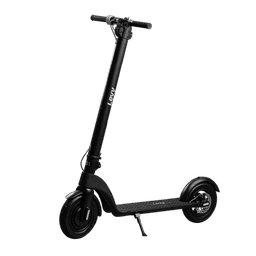
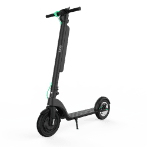
Examples: PCBA-LES-10300-03, in pilot production in Levy scooters
- Packs
- 2 independent discharge inputs
- Validated architecture
- 14S lithium-ion, 52 V nominal
- Board
- 100 × 50 mm, 2-layer, 3 oz copper, ENIG
- Build
- IPC-6012 Class 2, conformal coated
- Fault reporting
- Optically isolated to the motor controller
- Regen
- Not in the shipping board — in development
Strengths
- Works with packs you already have — your cells, your pack supplier, your form factor
- Once the packs are at similar voltage both feed the bus together, rather than one at a time
- Either pack removable mid-ride while the vehicle keeps running
- Built to a documented workmanship standard for a sealed consumer vehicle
- You talk to the engineers who designed it
Where it costs you
- No regenerative braking in the shipping revision
- No independent safety certificate — it is a component in your system certification
- No CAN bus; fault reporting is a simple isolated interface
- Validated around one architecture; anything else is a design conversation
- Small supplier, pilot-scale volumes
Best for: Manufacturers who have already chosen their packs and want both delivering current at once, without adopting someone else’s battery programme.