





Understanding the Weight of Razor Electric Scooters: A Comprehensive Guide
Razor scooter weights: E100 (29 lbs), Power Core E100 (22 lbs), E200 (38 lbs), E300 (46 lbs). Complete guide to why weight matters for portability, performance, and safety. Compare to lightweight competitors (25-30 lbs).
When choosing an electric scooter, weight is one of the most critical yet often overlooked specifications. The weight of your scooter affects everything from how easily you can carry it up stairs to how it performs on the road, how long the battery lasts, and whether it's safe for younger riders. Razor, one of the pioneering brands in the electric scooter market since the early 2000s, offers models ranging from lightweight 22-pound options to heavier 46-pound models designed for teens and adults. Understanding these weight differences—and why they matter—is essential for choosing the right Razor electric scooter for your needs.
This comprehensive guide covers the exact weight of every major Razor electric scooter model, explains why scooter weight significantly impacts your riding experience, compares Razor's weights to competing brands, and helps you determine the ideal weight range for your specific use case.
Complete Razor Electric Scooter Weight Specifications (2025)
Razor's electric scooter lineup includes models designed for different age groups, purposes, and performance levels. Here's the complete breakdown of scooter weights across Razor's most popular models.
Kids and Entry-Level Models
Razor Power Core E100
- Scooter weight: 22 lbs (10 kg) - Razor's lightest electric model
- Rider weight limit: 120 lbs maximum
- Motor: 100W hub motor (maintenance-free, no chains)
- Top speed: 11 MPH
- Recommended ages: 8+ years
- Key advantage: Lightest weight makes it easiest for kids and parents to carry
Razor E100
- Scooter weight: 29 lbs (13.15 kg)
- Rider weight limit: 120 lbs maximum
- Motor: 100W chain-driven motor
- Top speed: 10 MPH
- Recommended ages: 8+ years
- Note: 7 lbs heavier than Power Core E100 due to chain-drive system vs hub motor
Teen and Young Adult Models
Razor E200
- Scooter weight: 38.17 lbs (17.35 kg)
- Rider weight limit: 154 lbs maximum
- Motor: 200W high-torque chain-driven motor
- Top speed: 12 MPH
- Recommended ages: 13+ years
- Deck size: Larger deck than E100 contributes to additional weight
Razor E300
- Scooter weight: 46 lbs (21 kg) - Razor's heaviest mainstream model
- Rider weight limit: 220 lbs maximum
- Motor: 250W chain-driven motor
- Top speed: 15 MPH
- Recommended ages: 13+ years to adult
- Features: Extra-large deck, wider frame for stability, pneumatic tires (9-inch front, 8-inch rear)
- Note: Weight increase allows higher weight capacity and more powerful motor
Weight Progression Pattern Across Models
Razor's model lineup shows a clear weight progression that correlates with increased power, speed, and rider capacity:
- 22 lbs (Power Core E100): Lightest, 100W, 120 lb capacity, 11 MPH
- 29 lbs (E100): Entry-level, 100W, 120 lb capacity, 10 MPH
- 38 lbs (E200): Mid-range, 200W, 154 lb capacity, 12 MPH
- 46 lbs (E300): Heavy-duty, 250W, 220 lb capacity, 15 MPH
The pattern demonstrates that as Razor increases motor power, speed capabilities, and structural strength to support heavier riders, the scooter weight necessarily increases.
Why Electric Scooter Weight Matters: Critical Considerations
Understanding the specific weight of a Razor scooter is only useful when you know how that weight impacts your actual riding experience. Here's why scooter weight is a critical specification.
Portability and Transport
Carrying up stairs and into buildings:
One of the most common scenarios for scooter owners is carrying the scooter up apartment stairs, into offices, or onto public transportation. Weight makes an enormous difference:
- 22-30 lbs (Power Core E100, E100): Manageable for most adults and older children; can be carried for short distances without significant strain
- 38 lbs (E200): Borderline for extended carrying; manageable for adults but challenging for teens or those with limited upper body strength
- 46 lbs (E300): Difficult to carry for extended periods; requires good physical strength; not practical for daily stair-climbing
Public transportation:
Many commuters combine scooters with buses, trains, or subways. Lighter scooters are significantly easier to maneuver through crowded stations, lift onto buses, and store in designated areas. The 22-lb Power Core E100 offers the best public transit compatibility, while the 46-lb E300 is impractical for multi-modal commuting.
Car trunk storage:
While any Razor scooter can fit in most car trunks, lighter models are easier to lift in and out repeatedly. For families taking scooters on trips, the weight difference between handling multiple 22-lb scooters versus 46-lb scooters is substantial.
Handling and Maneuverability
Agility vs. stability tradeoff:
- Lighter scooters (22-29 lbs): More agile, easier to turn quickly, better for weaving through pedestrians or obstacles, ideal for younger riders who need responsive handling
- Heavier scooters (38-46 lbs): More stable at higher speeds, less susceptible to bumps and uneven surfaces, provide planted feel that inspires confidence, better for straight-line cruising
Control for younger riders:
A critical safety consideration: children must be able to control and maneuver their scooter effectively. The 22-lb Power Core E100 allows an 8-year-old to easily handle, steer, and stop the scooter. The 46-lb E300, while rated for ages 13+, may be challenging for smaller teens to control in emergency situations or when navigating obstacles.
Performance Characteristics
Acceleration:
Lighter scooters accelerate more quickly with the same motor power. The 22-lb Power Core E100 reaches its 11 MPH top speed faster than the heavier E100 reaches 10 MPH, despite having the same 100W motor power (though the Power Core uses more efficient hub motor technology).
Battery life and range:
Scooter weight directly affects battery consumption. Less weight means the motor requires less energy to move the scooter, extending battery life and range. However, Razor's heavier models include larger batteries to compensate, so actual range varies by model rather than following a strict weight-to-range correlation.
Impact of rider weight:
The combined weight of scooter + rider determines actual performance. Research shows:
- Exceeding recommended weight limits reduces speed by 10-15%
- Battery range decreases by 20-25% when overloaded
- Acceleration can drop by up to 40%, turning a 15 MPH scooter into an effective 9-12 MPH scooter
This makes choosing a scooter with appropriate weight capacity crucial for maintaining advertised performance.
Razor Weights Compared to Other Brands
How do Razor's scooter weights stack up against competing brands in the electric scooter market?
Lightweight Commuter Category (20-35 lbs)
Ultra-lightweight competitors (under 27 lbs):
- NIU KQi Air X: 25.8 lbs (carbon fiber construction)
- NIU KQi Air: 26.2 lbs (carbon fiber)
- Fluid Mosquito: 29 lbs
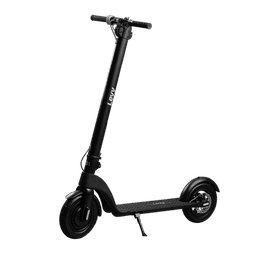
- Levy: Under 27 lbs (aerospace-grade aluminum, swappable batteries)
Razor in this category:
- Razor Power Core E100: 22 lbs - Actually lighter than most premium lightweight adult commuter scooters
- Razor E100: 29 lbs - Competitive with budget lightweight models
Analysis: Razor's entry-level models are surprisingly competitive in weight with adult commuter scooters, though they're designed for kids rather than adults. This makes them excellent lightweight options for shorter adult riders within the 120-lb weight limit.
Mid-Range Category (35-45 lbs)
Mid-range competitors:
- Turboant M10 Lite: 30.9 lbs
- Fluid CITY RIDER: 31 lbs
- Xiaomi Pro 2: 31.3 lbs (14.2 kg)
- VMAX VX5 Pro: 36.8 lbs
- Segway Ninebot ES2/ES4: Similar weight range
- NIU KQi 100F: 38.8 lbs
- Splach Ranger: 39 lbs
Razor in this category:
- Razor E200: 38.17 lbs - Competitive but on the heavier end of mid-range
Analysis: The E200 is heavier than most comparable mid-range adult scooters from brands like Xiaomi and Turboant, primarily due to Razor's use of steel frames and chain-drive systems rather than lighter aluminum frames and hub motors.
Heavy-Duty Category (45+ lbs)
Heavy-duty competitors:
- Segway Ninebot Max G30: 41.2 lbs (18.7 kg)
- NIU KQi3 Pro: 45 lbs
- Average adult scooter: 60.2 lbs
- High-performance models: 80-145 lbs
Razor in this category:
- Razor E300: 46 lbs - Actually lighter than many adult heavy-duty scooters
Analysis: The E300 is relatively lightweight for its 220-lb weight capacity compared to adult scooters with similar capacities. However, it still weighs more than premium competitors like the Segway Max G30 (41.2 lbs, 220 lb capacity) that offer similar performance in a lighter package.
Materials and Construction Differences
The weight differences between Razor and competitors largely come down to materials and design choices:
- Razor: Steel frames, chain-drive systems (except Power Core), traditional construction prioritizing durability and low cost
- Premium competitors (NIU, Levy, Segway): Aluminum alloy or carbon fiber frames, hub motors (no chains), modern lightweight engineering
- Weight savings: Modern lightweight materials can reduce weight by 20-30% while maintaining or improving strength
Rider Weight Limits: Critical for Safety and Performance
While scooter weight affects portability and handling, rider weight limits are equally important for safety and performance.
Razor Weight Limit Specifications
- E100 and Power Core E100: 120 lbs maximum rider weight
- E200: 154 lbs maximum rider weight
- E300: 220 lbs maximum rider weight
Why Staying Within Weight Limits Matters
Safety concerns:
- Frame stress and potential structural failure when exceeding limits
- Brake effectiveness reduced with heavier loads
- Stability compromised, especially during turns or on uneven surfaces
- Increased stopping distance creates collision risks
Performance degradation:
- Speed reduction: 10-15% slower than advertised when near or above weight limit
- Battery life: 20-25% reduction in range
- Acceleration: Up to 40% loss in responsiveness
- Motor strain: Overworking motor leads to overheating and premature failure
Warranty implications:
Using a scooter beyond its stated weight capacity voids manufacturer warranties. Damage caused by overloading—including bent frames, motor burnout, or brake failure—will not be covered by Razor's warranty.
How to Choose the Right Scooter Weight for Your Needs
Different use cases require different weight considerations. Here's how to determine the ideal scooter weight for your situation.
For Kids (Ages 8-12)
Recommended weight range: 20-30 lbs
Best Razor options:
- First choice: Power Core E100 (22 lbs) - Lightest option, easiest for kids to control
- Alternative: E100 (29 lbs) - Still manageable, slightly more stable
Key considerations:
- Can the child lift and carry the scooter if it runs out of battery?
- Can they maneuver it safely around obstacles?
- Will parents need to carry it frequently (into car, up stairs)?
For Teens (Ages 13-17)
Recommended weight range: 30-45 lbs depending on teen's size and strength
Best Razor options:
- Smaller/lighter teens (under 140 lbs): E200 (38 lbs, 154 lb capacity)
- Larger/stronger teens (over 140 lbs): E300 (46 lbs, 220 lb capacity)
Key considerations:
- Teen's physical strength for carrying scooter
- Rider weight + safety margin (should be 20+ lbs under limit for optimal performance)
- Need for portability vs. speed and power
For Adults and Commuters
Recommended weight range: 25-40 lbs for maximum portability; 40-50 lbs if prioritizing performance
Razor compatibility:
Most adults exceed Razor's weight limits:
- E100/Power Core E100 (120 lb limit): Only suitable for very small adults under 100 lbs
- E200 (154 lb limit): Suitable only for adults under 135 lbs (leaving safety margin)
- E300 (220 lb limit): Suitable for adults up to 200 lbs
Better adult alternatives:
For adult commuters, scooters designed specifically for adults offer better weight-to-performance ratios:
- Lightweight portable (under 30 lbs): Levy (under 27 lbs, swappable batteries, adult weight capacity), NIU KQi Air (26 lbs), Fluid CITY RIDER (31 lbs)
- Mid-range performance (30-40 lbs): Xiaomi Pro 2 (31 lbs), NIU KQi 100F (39 lbs)
- Heavy-duty (40-50 lbs): Segway Max G30 (41 lbs, 220 lb capacity)
Multi-Modal Commuters (Scooter + Public Transit)
Maximum recommended weight: 35 lbs
Why: Anything above 40 lbs becomes difficult for daily carry through crowded stations, up escalators, and onto buses. You'll be lifting your scooter multiple times daily, so every pound matters.
Ideal range: 25-30 lbs offers the best balance of portability and adult-appropriate performance.
Weight vs. Other Important Specifications
While weight is important, it's not the only specification to consider. Here's how weight relates to other critical factors.
Weight vs. Range
Lighter scooters generally have shorter range due to smaller batteries, but modern engineering is changing this:
- Traditional tradeoff: Lighter = smaller battery = shorter range
- Modern solution: Swappable batteries (like Levy's system) allow ultra-lightweight design with unlimited range by carrying spare batteries
- Razor approach: Heavier models have larger fixed batteries for extended range
Weight vs. Durability
Common misconception: Heavier = more durable. Reality is more nuanced:
- Heavy traditional materials (steel): Durable but adds weight
- Modern lightweight materials (aerospace aluminum, carbon fiber): Equal or greater durability at lower weight
- Quality matters more than weight: A well-engineered 25-lb scooter can outlast a poorly-built 45-lb scooter
Weight vs. Price
- Lightweight budget scooters (20-30 lbs): $200-$400 - Often sacrifice quality
- Lightweight premium scooters (25-30 lbs): $500-$1,000+ - Use advanced materials
- Heavy budget scooters (40-50 lbs): $300-$500 - Durable but not portable
- Razor positioning: Budget to mid-range pricing with competitive weight in entry models
Practical Tips for Managing Scooter Weight
Carrying Techniques
- For short distances: Carry by stem/handlebar with scooter vertical
- Up stairs: Fold if possible, carry vertically close to body, use legs not back
- Extended carrying: Consider a shoulder strap (aftermarket accessory)
- Two-person carry: For heavier models, one person on each end for stairs
Storage Solutions
- Wall mounts: Keep heavier scooters off floor, prevent need for frequent lifting
- Garage racks: Store at accessible height
- Trunk organizers: Prevent scooter from rolling around during transport
Maintenance Impact on Weight
- Dirt and debris accumulation: Regular cleaning prevents weight gain from built-up dirt
- Battery replacement: Aftermarket batteries may weigh differently than originals
- Accessories: Lights, phone mounts, baskets add weight - consider carefully
Conclusion: Matching Weight to Your Needs
Understanding Razor electric scooter weights—from the lightweight 22-lb Power Core E100 to the heavier 46-lb E300—is essential for making an informed purchase decision. Each model's weight reflects deliberate engineering choices balancing portability, performance, durability, and cost.
Key takeaways:
- Razor model weights: 22 lbs (Power Core E100), 29 lbs (E100), 38 lbs (E200), 46 lbs (E300)
- Weight impacts: Portability, handling, acceleration, battery life, safety for younger riders
- Lighter is better for: Kids, public transit commuters, frequent carrying, agile maneuvering
- Heavier is better for: Stability, higher weight capacity, straight-line cruising
- Sweet spot for portability: 25-35 lbs for daily carry; under 40 lbs maximum for regular stairs/transit use
- Rider weight matters: Stay 20+ lbs under stated limits for optimal performance
- Razor vs. competitors: Entry-level Razors competitive in weight; mid/heavy models heavier than premium aluminum/carbon fiber alternatives
For Razor buyers: The Power Core E100 offers Razor's best weight-to-performance ratio at just 22 lbs. For heavier riders needing the E300's 220-lb capacity, be prepared for the portability tradeoff that comes with 46 lbs.
For adult commuters: While Razor scooters work for lighter adults (under 200 lbs), adult-specific brands offer superior weight-to-performance engineering. Scooters like Levy (under 27 lbs with swappable batteries), NIU KQi models (25-39 lbs), and Xiaomi options (31 lbs) provide adult power and range in packages 10-20 lbs lighter than comparable Razor models.
Ultimately, the right scooter weight depends on your specific situation: rider weight, physical strength, portability needs, and intended use. By understanding exactly how the 22-46 lb range of Razor scooters matches these factors, you can choose a model that balances all your priorities for the best possible riding experience.