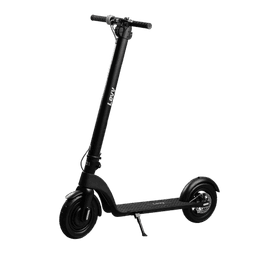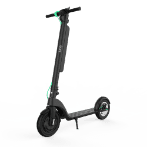
The Segway Ninebot Max takes a 10″ × 2.5″ tire. Levy stocks it in two versions: a solid tire from $28.99 and an air-filled tire from $23.99. The same tire is listed as fitting Okai ES400 series scooters. Solid removes punctures and removes the air cushion — which one is right depends on the road you ride, and the section below says so plainly.
| Size | 10" x 2.5" |
|---|---|
| Options | Solid, or air-filled |
| Listed fitment | Segway Max series electric scooters; Okai ES400 series scooters |
| Solid tire price | $28.99 |
| Air tire price | $23.99 |
Fitment and prices on this page were checked against the live product pages at shop.levyelectric.com on August 25, 2026. Prices change; the product page is always the authority. Compatibility that Levy has not confirmed is marked as unconfirmed rather than guessed.
| Solid tire | Air-filled tire | |
|---|---|---|
| Punctures | Impossible. No air, nothing to lose. | Possible, and the reason most riders end up here. |
| Ride quality | Firmer. On a scooter without suspension you feel seams and expansion joints. | Softer. The air is doing suspension work the frame does not. |
| Maintenance | None. No pressure to check, no valve to fail. | Check pressure regularly; underinflation causes pinch flats. |
| Fitting | Harder to get on. Budget more time or pay a shop. | Easier to fit, and easier to get wrong by pinching the tube. |
| Best for | Debris-heavy city routes, and anyone who has fixed two flats this year. | Smooth pavement, longer rides, and riders who care about comfort. |
There is no universally right answer and we are not going to pretend there is. The honest rule of thumb: count how many flats you have had in the last twelve months. Two or more, go solid. Zero, stay on air.
From $23.99
Fits
Options
From $28.99
Fits
From $4.99
Fits
This is the scooter job most likely to end at a shop, and there is no shame in that. The wheel is built around a hub motor with a cable running into it, and the bead is genuinely tight.
Not up for it? Find an electric scooter repair shop near you — a bike or powersports shop will usually fit a scooter tire.
The Max tire is one of several sizes. If you are here for a different scooter, the size finder covers everything Levy carries, including the 8.5″, 10″ × 2″, 10″ × 2.125″ and 60/70–6.5 sizes.
A 10 inch by 2.5 inch tire. The replacement Levy stocks is listed at 10 x 2.5 and comes in a solid or an air-filled version. The same tire is listed as compatible with Okai ES400 series scooters.
It depends entirely on where you ride. A solid tire cannot puncture, so if your commute involves construction debris or glass, it removes the failure that strands you. In exchange you lose the air cushion, and on a scooter with no suspension you feel that on every seam and pothole. Riders who fix flats more than twice a year usually switch. Riders on smooth pavement usually should not.
Only if your Max runs an air-filled tire and the tube is damaged. The solid tire needs no tube and no air at all. Levy stocks 8.5 inch and 10 inch inner tubes for Levy scooters; if you need a Ninebot-specific tube, match the size printed on the sidewall of your existing tire.
Harder than a bicycle tire, and it is the job that most often ends in a trip to a shop. The wheel is built around a hub motor, the bead is tight, and levering it off without the right tools can damage the rim or pinch the tube. If you do not already own tire levers you are comfortable with, the labour at a local bike or powersports shop is usually cheaper than a second tire.
Levy scooters fitted with extra-thick inner tubes use 50 to 60 PSI. For a Ninebot, use the pressure specified for your own model rather than a figure from another brand. Underinflation is the most common cause of a pinch flat.