





How to Tell Whether an Electric Scooter Is Legal to Buy and Ride in NYC
Before buying an electric scooter in NYC, check its speed, weight, UL certification, battery, labeling, charger, support, and local riding rules.
How to Tell Whether an Electric Scooter Is Legal to Buy and Ride in NYC
Online marketplaces contain thousands of products labeled as electric scooters, commuter scooters, e-bikes and mopeds. Those labels are not always reliable.
A product described as a “city scooter” may actually have the speed, weight and power of a small motorcycle. Another product may have an acceptable top speed but lack the electrical-system or battery certification required for sale in New York City.
Before ordering an electric scooter for NYC use, check these eight things.
1. Find the scooter’s actual maximum capability
New York City identifies a qualifying e-scooter as a device with a maximum capability of no more than 20 mph. The City’s August 2026 enforcement action specifically targets stand-up scooters capable of traveling faster than 20 mph.
Do not rely on a product title, a “street mode” or an advertising phrase such as “legal edition.” Find the manufacturer’s actual maximum capability in the technical specifications, manual, controller settings and product documentation.
A listing that says “15 mph in Eco mode” but “35 mph maximum” is still describing a device capable of 35 mph.
2. Check the scooter’s weight
The qualifying e-scooter category described by NYC guidance is under 100 pounds. The City’s enforcement announcement identifies stand-up scooters over 100 pounds as prohibited to sell or operate on public streets as ordinary scooters.
The 100-pound line captures extremely large products, but weight also matters practically. New Yorkers regularly encounter stairs, small apartments, narrow hallways, elevators, office storage rules and transit connections. A 75-pound product may be technically foldable and still be unrealistic for everyday commuting.
3. Verify UL 2272 for the complete scooter
New York City requires powered mobility devices such as e-scooters to be certified to UL 2272 by an accredited testing laboratory.
UL 2272 concerns the electrical system of the complete personal e-mobility device. It is not merely a claim that one battery cell or charger component was tested.
Look for the accredited testing laboratory’s logo, wordmark or name on the product itself. For an online purchase, confirm that the applicable certification also appears on the exact listing page. Supporting packaging and documentation can provide additional evidence, but they should not replace the required product marking and online disclosure.
4. Verify UL 2271 for the storage battery
The battery has a separate standard. NYC identifies UL 2271 as the applicable requirement for storage batteries used in powered bicycles and powered mobility devices.
Do not accept “the scooter is UL certified” as the entire answer. Ask for the evidence that applies to the complete scooter and the evidence that applies to the battery. Our UL 2272 vs. UL 2271 guide explains the difference in detail.
Replacement batteries require the same care. A certified scooter paired later with an uncertified or incompatible replacement pack can create serious safety and compliance problems.
5. Inspect the online listing itself
NYC requires an online product page to display the safety certification or the accredited testing laboratory’s logo, wordmark or name. The listing must also include a link to the required DCWP and FDNY battery-safety information.
Warning signs include:
- No identifiable manufacturer.
- No exact model number.
- No accredited laboratory mark.
- A generic “UL” logo with no standard or traceable record.
- Conflicting speed, weight or battery specifications.
- A seller that changes the model name between the title and technical table.
- No customer support, replacement parts or service information.
6. Confirm the approved battery and charger
Use the battery and charger made or expressly approved for the exact scooter model.
NYC DOT advises riders to use approved batteries and chargers, avoid unattended or overnight charging, keep devices away from heat, and stop using a battery that changes shape or color, leaks, smells unusual, overheats or makes unusual sounds.
The charger voltage, connector, current and battery-management behavior all matter. A plug that physically fits is not proof of compatibility.
7. Look for real support and repairability
A low purchase price can become expensive when a seller cannot provide a tire, brake component, charger, battery, controller, wiring diagram or repair answer.
Before buying, ask:
- Is there a support team with a real email address and phone number?
- Are replacement tires, tubes, brake pads, chargers and batteries available?
- Can the manufacturer identify compatible parts by model and version?
- Are manuals and service guides public?
- Is there a warranty with a clear process?
New York City riders put unusually high mileage and wear on commuter scooters. Serviceability is not an optional luxury.
8. Understand the riding rules before the first trip
A legal product can still be used illegally. NYC DOT says:
- Riders must be at least 16.
- E-scooters may not be operated faster than 15 mph.
- They may use bicycle lanes.
- They may use vehicle lanes on streets with speed limits no greater than 30 mph.
- They may not be ridden on sidewalks.
- Helmets are required for riders 16 or 17 and recommended for everyone.
An ordinary qualifying e-scooter does not need a driver’s license, license plate, VIN or DMV registration. A moped does. The complete NYC laws guide covers every category.
A fast pre-purchase checklist
| Question | What you want to see |
|---|---|
| What is the real maximum speed? | 20 mph or less for the qualifying NYC e-scooter category |
| What does it weigh? | Under 100 pounds, with a practical carrying weight for your home and commute |
| Is the complete scooter certified? | UL 2272 from an accredited testing laboratory |
| Is the battery certified? | UL 2271 from an accredited testing laboratory |
| Does the listing show the lab mark? | Yes, on the exact product page |
| Is the NYC safety link present? | Yes, on the product page |
| Is the charger model-specific? | Yes |
| Are parts and support available? | Yes, from an identifiable company |
Where the Levy Light and Levy Plus fit
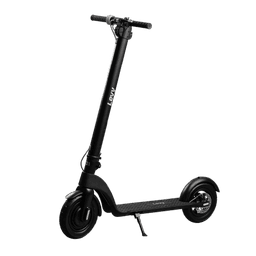
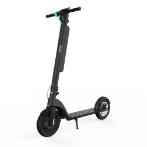
The Levy Light has a current published top speed of up to 18 mph, a weight of 27 pounds and a removable battery. The Levy Plus has a current published top speed of up to 20 mph, a weight of 31 pounds and a larger removable battery.
Based on those speed and weight specifications, both models are at or below NYC’s basic e-scooter threshold. Levy states that both models carry UL 2272 certification and provides replacement parts and support resources.
Buyers should still verify the exact unit, battery certification, testing-laboratory marks, online disclosures and current law at the time of purchase. That is the right standard for every brand, including Levy.
The practical conclusion
The best city scooter is not necessarily the product with the largest motor or highest speedometer number. In New York, transparent specifications, proper certification, manageable weight, removable or replaceable components and long-term support usually provide more value than speed a rider cannot lawfully use.
Shop the Levy Light
Shop the Levy Plus
View Levy’s New York purchase, rental and subscription options
More NYC scooter guides from Levy
- Electric Scooter Laws in NYC: The Complete 2026 Guide
- NYC E-Scooter Crackdown: What the 20 MPH Rule Means
- NYC Scooter Speed Limit: 20 MPH vs. 15 MPH
- Levy Light vs. Levy Plus for NYC Commuting
- UL 2272 vs. UL 2271: NYC Electric Scooter Certification Guide
- What NYC May Do Next: The September 30 E-Scooter Hearing
Official sources
- NYC DCWP: Micromobility device and battery certification requirements
- NYC DOT: Electric Bicycles & More (riding rules and vehicle categories)
General information only; not legal advice. Last reviewed August 6, 2026.