





Electric Scooter Laws in NYC: The Complete 2026 Guide
A complete guide to NYC electric-scooter laws, including the 20 mph device limit, 15 mph riding limit, where scooters may be ridden, age rules, and UL certification.
Electric Scooter Laws in NYC: The Complete 2026 Guide
Electric scooters are legal in New York City, but the rules are more specific than many online product listings suggest. The law distinguishes among qualifying e-scooters, e-bikes, mopeds and high-speed devices that cannot lawfully be sold or operated as ordinary scooters.
The most important numbers are 20 mph, 15 mph and 100 pounds:
- A qualifying e-scooter may have a maximum capability of up to 20 mph.
- A rider may not operate an e-scooter faster than 15 mph on a New York City street.
- The scooter must be under 100 pounds to fit the category described by NYC guidance.
The product also has to meet New York City’s electrical-safety, certification, labeling and online-disclosure requirements.
Quick answer: are electric scooters legal in NYC?
Yes. NYC DOT expressly says e-scooters are allowed in the city.
A qualifying e-scooter may be ridden in bike lanes and on streets with speed limits no greater than 30 mph. It may not be ridden on sidewalks. Riders must be at least 16 years old. An ordinary qualifying e-scooter does not require a driver’s license, license plate, VIN or DMV registration.
Helmets are recommended for all riders and required for riders who are 16 or 17.
What counts as an e-scooter in New York City?
NYC’s consumer-protection guidance distinguishes a qualifying e-scooter from a broader category of motorized scooters. The qualifying exception is an e-scooter that weighs less than 100 pounds and has a maximum speed of 20 mph.
On August 5, 2026, the Mayor’s Office restated the line in enforcement terms: it is illegal to sell or operate on public streets a motorized stand-up scooter weighing more than 100 pounds or capable of traveling faster than 20 mph.
This means the name used by a seller is not decisive. A large, 45 mph product does not become a legal stand-up scooter because its listing calls it a “commuter scooter.” Regulators look at what the device actually is and what it is capable of doing.
The 20 mph device limit and 15 mph riding limit
These two rules are often confused.
| Rule | Applies to | What it means |
|---|---|---|
| 20 mph maximum capability | The e-scooter itself | A stand-up scooter capable of more than 20 mph does not fit the qualifying e-scooter category. |
| 15 mph operating limit | The person riding | A rider may not travel faster than 15 mph on any New York City street. |
| Under 100 pounds | The e-scooter itself | A stand-up scooter above the weight threshold falls outside the category described by the City. |
A scooter capable of 18 mph may fit the product category, but the rider must still keep it at or below 15 mph. A scooter capable of exactly 20 mph is at the product threshold, but the same 15 mph riding rule applies.
A scooter capable of 25 or 30 mph presents a different problem. Because the City’s language focuses on what the device is capable of, selecting a user-controlled Eco mode does not clearly change the device’s legal maximum capability. A permanent manufacturer configuration may require a different analysis, but sellers should not assume a temporary setting solves the issue. See the full 20 mph vs. 15 mph explainer for examples.
Where may electric scooters be ridden?
NYC DOT says qualifying e-scooters may be ridden:
- In bicycle lanes.
- In vehicle lanes on streets with speed limits no greater than 30 mph.
- In bridge bicycle lanes where bicycles and e-scooters are permitted.
- In park drives and greenways under the current NYC Parks framework identified by DOT.
They may not be ridden on sidewalks. Riders should stay to the appropriate lane, yield to pedestrians, watch for turning vehicles, follow traffic controls and use extra caution around crosswalks, driveways, buses and loading zones.
Age, license, registration and helmet rules
For an ordinary qualifying e-scooter in NYC:
| Question | Answer |
|---|---|
| Minimum rider age | 16 |
| Driver’s license required | No |
| License plate required | No |
| VIN required | No |
| DMV registration required | No |
| Helmet required | Yes for riders 16 or 17; recommended for everyone |
These answers change when the vehicle is actually a moped or limited-use motorcycle. Mopeds require a VIN, DMV registration, a license plate and the appropriate driver’s license. They generally may not be ridden in bicycle lanes.
E-scooter, e-bike or moped: why the category matters
Many products now look similar even though the legal rules are different.
Qualifying e-scooter. Under 100 pounds and capable of no more than 20 mph. It does not require DMV registration and may use bicycle lanes, subject to local rules.
E-bike. NYC recognizes Class 1, Class 2 and Class 3 e-bikes. Class 1 and 2 devices may be capable of up to 20 mph; Class 3 devices up to 25 mph. In New York City, riders in all three classes are subject to the city’s 15 mph operating limit.
Moped or limited-use motorcycle. A motor-vehicle category. It requires a VIN, registration, plate and driver’s license. Depending on its class, its maximum capability may be 20, 30 or 40 mph. It belongs in vehicle lanes, not bicycle lanes.
Illegal high-speed product marketed as a scooter or e-bike. A product that exceeds the relevant scooter or e-bike thresholds but lacks the identification and registration needed for a moped may have no lawful path onto city streets. That is the category at the center of New York City’s August 2026 retailer enforcement action.
What certification does an electric scooter need in NYC?
New York City treats electrical safety as a separate legal requirement from traffic classification.
Businesses may only sell, lease or rent powered mobility devices such as e-scooters when the device has been certified to UL 2272 by an accredited testing laboratory. The storage battery must be certified to UL 2271.
The device and battery must display the logo, wordmark or name of the accredited testing laboratory. For online sales, the safety certification must appear on each product listing page, and listings must include the required link to DCWP and FDNY battery-safety information. Businesses must maintain proof of certification for three years.
A scooter can be slow enough to fit the traffic category and still be unlawful to sell if its electrical system or battery lacks the required certification and labeling. See the UL 2272 vs. UL 2271 certification guide for how to verify a listing.
Battery and charging rules that matter in practice
NYC DOT advises riders to use approved batteries and chargers, keep batteries at room temperature, avoid direct heat and avoid unattended or overnight charging. A device should never block the primary exit from a room or apartment.
Stop using a battery immediately if it overheats, changes shape or color, leaks, smells unusual or makes unusual sounds. NYC advises calling 911 for a battery fire — riders should not assume a household fire extinguisher or water will control a lithium-ion battery fire.
Replacement batteries and chargers deserve the same scrutiny as the original equipment. A scooter that was sold with a certified electrical system can become much riskier when paired with an unapproved replacement battery, modified controller or incompatible charger.
What did New York City do on August 5, 2026?
The City issued cease-and-desist orders to 42 online retailers, covering sales into all 175 NYC ZIP codes. The orders demanded an immediate stop to sales of illegal high-speed devices:
- Stand-up scooters over 100 pounds or capable of exceeding 20 mph.
- E-bikes with motors over 750 watts or capable of exceeding 25 mph.
- Seated mopeds without a valid, displayed VIN.
The City says continued illegal sales may generate civil penalties of up to $2,000 per transaction, and illegal devices operated on city streets may be impounded.
This enforcement action did not create an entirely new ban on August 5. It put retailers on notice that the City intends to enforce existing categories and sales rules more aggressively.
What may change after the September 30 hearing?
The City Council has announced a comprehensive hearing for September 30, 2026, with more than a dozen proposals and oversight questions on the initial agenda — delivery-service licensing, a possible prohibition on Class 3 e-bike sales and rentals, delivery-platform data reporting, expanded commercial safety rules, enforcement reporting, trade-in incentives and street-design measures.
These are proposals under review, not enacted requirements. See what NYC may do next for the full list and timeline.
How do the Levy Light and Levy Plus fit?
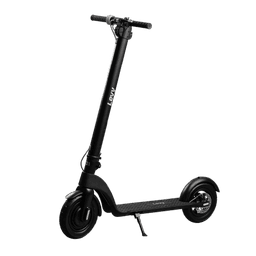
The Levy Light has a current published top speed of up to 18 mph, a published weight of 27 pounds and a removable battery. The Levy Plus has a current published top speed of up to 20 mph, a published weight of 31 pounds and a larger removable battery.
Based on those published speed and weight specifications, the Light and Plus are at or below New York City’s basic e-scooter category thresholds, and Levy states that both models carry UL 2272 certification. Full sales compliance also depends on the exact unit, battery certification, laboratory marks, listing disclosures, labeling and current law. Riders must separately follow the 15 mph operating limit and location rules.
Compare the Levy Light and Levy Plus for NYC commuting
Frequently asked questions
Are electric scooters banned in New York City?
No. Qualifying electric scooters remain legal. The City is targeting high-speed, overweight, uncertified or improperly classified products.
Can I buy a scooter capable of exactly 20 mph?
The City’s published threshold is no more than 20 mph for the qualifying e-scooter category. A rider must still remain at or below 15 mph in NYC.
Does Eco mode make a 30 mph scooter legal?
Not necessarily. The City’s enforcement language focuses on what the device is capable of doing, not merely the mode selected for a particular trip.
Can I ride on the sidewalk?
No. NYC DOT says e-scooters may not be ridden on sidewalks.
Do I need a driver’s license or plate?
Not for an ordinary qualifying e-scooter. A moped requires both, along with registration and a VIN.
Is a helmet required?
A helmet is required for e-scooter riders who are 16 or 17 and recommended for everyone.
Does UL 2272 cover the battery by itself?
UL 2272 applies to the powered mobility device’s electrical system. NYC separately requires the storage battery to be certified to UL 2271.
Can the rules change again?
Yes. The Council hearing and future legislation may change the regulatory environment. Check official NYC sources immediately before buying, selling, renting or publishing legal claims.
The practical takeaway
For New York riders, the safest purchasing process is straightforward: confirm the real maximum speed and weight, confirm the vehicle category, verify UL 2272 and UL 2271 evidence, use the approved charger and understand the 15 mph riding limit before the first trip. Our eight-point buying checklist walks through each step.
For manufacturers and retailers, transparent specifications are now a competitive advantage. Consumers should not have to guess whether a product sold as a scooter is actually an unregistered motor vehicle.
View Levy’s New York purchase, rental and subscription options
More NYC scooter guides from Levy
- How to Tell Whether an Electric Scooter Is Legal to Buy and Ride in NYC
- NYC E-Scooter Crackdown: What the 20 MPH Rule Means
- NYC Scooter Speed Limit: 20 MPH vs. 15 MPH
- Levy Light vs. Levy Plus for NYC Commuting
- UL 2272 vs. UL 2271: NYC Electric Scooter Certification Guide
- What NYC May Do Next: The September 30 E-Scooter Hearing
Official sources
- NYC DOT: Electric Bicycles & More (riding rules and vehicle categories)
- NYC DCWP: Micromobility device and battery certification requirements
- NYC Mayor’s Office: August 5, 2026 cease-and-desist announcement
- New York City Council: August 4, 2026 e-bike and e-scooter safety review announcement
General information only; not legal advice. Last reviewed August 6, 2026.